Best Sofa Fabric for Pets: A UK Guide to Dog and Cat Proof Upholstery

The best sofa fabrics for pets are top grain leather, performance microfiber, branded performance fabrics such as Crypton and Revolution, and tightly woven indoor outdoor weaves such as Sunbrella. Look for at least 30,000 double rubs, a low flat weave that resists claw snags, and a cleaning code of W or S/W.
What makes a sofa fabric pet friendly
Four things decide whether a sofa survives pets: weave, fibre, finish and cleaning code. Weave matters most, since a tight, flat weave gives claws nothing to catch, while a loose or looped weave snags and pulls. Fibre decides how the fabric handles stains and odours: synthetics such as polyester and olefin resist stains better than natural fibres, while leather does not absorb dander or pet odours at all. Finish decides whether protection lasts: branded performance fabrics build stain and odour protection into every fibre rather than spraying it on, so the performance does not wash out. Cleaning code decides how easy the sofa is to clean after an accident, and a code of W or S/W is the most forgiving. For more on fabric types generally, see our types of fabric guide.
Which sofa fabrics are best for pets?
| Fabric | Claw resistance | Hair removal | Stains | Odour | Best for |
|---|---|---|---|---|---|
| Microfiber | Exceptional | High | Excellent | Moderate | Everyday family sofas |
| Top grain leather | Good | Exceptional | Excellent | Exceptional | Wipe clean ease, long life |
| Crypton | Exceptional | High | Exceptional | Exceptional | Homes with accidents |
| Revolution | High | High | Exceptional | High | Stain proof family sofas |
| Sunbrella | High | High | Excellent | High | Sunny rooms, bleach cleaning |
| Performance velvet | High | Moderate | High | High | Soft look, pet homes |
| Faux leather | Moderate | Exceptional | Excellent | High | Budget wipe clean sofas |
Which fabric should you choose?
Microfiber
Microfiber tops the list with its superior pet hair resistance and easy cleaning properties. It is a tightly woven, high density synthetic, usually polyester, and its smooth surface gives hair little to grip, so a quick vacuum or damp cloth removes most of it. It resists surface fuzzing better than low grade fabrics, and it handles accidents well, since most spills blot up before they soak in. Choose a high density, performance grade microfiber rather than a cheap, loosely woven one, since the weave is what does the work.
Leather
Genuine leather remains a top choice for pet owners who value longevity and natural materials. Leather is completely impervious to pet hair, and it does not absorb dander or pet odours, keeping your living room smelling fresh. Full grain leather lasts 10 to 15 years with pets, while top grain leather with a protective finish offers the best balance of cost, appearance and resilience, lasting 8 to 12 years. Avoid aniline dyed leathers, which are porous and absorb liquids and oils, and are impractical with pets. Leather shows scratches, so expect a lived in patina, and condition it monthly to prevent cracking. For more on leather as a material, see our footwear fabric materials guide.
Crypton and Revolution
Crypton and Revolution are branded performance fabrics that build protection into the fibre itself. Crypton is a composite fabric, usually a polyester core with a nylon surface, that is engineered to be stain resistant, moisture repellent, breathable and antimicrobial, all without topical chemical treatments that can wear off. It famously resets oils, dyes and bodily fluids, and many Crypton Home fabrics are rated around 50,000 double rubs with a cleaning code of W, and are engineered to resist odour causing microbes. Revolution uses solution dyed olefin, where colour is locked into the yarn itself, so the fabric is virtually unstainable and rated around 30,000 double rubs. Both are PFAS free. Note that Revolution is spot clean only, so skip steam and high heat, which can damage olefin.
Sunbrella and solution dyed acrylic
Sunbrella and similar solution dyed acrylics were engineered for the elements, which makes them tough enough for the messiest households. Their 100 percent solution dyed acrylic fibres mean the colour is embedded throughout the fibre, making them exceptionally fade resistant and bleach cleanable: you can often use a mild bleach solution to eradicate even the toughest biological stains without damaging the fabric's colour or integrity. They are mould and mildew resistant and GREENGUARD Gold certified, with residential ratings above 15,000 double rubs and contract versions tested to 30,000 and beyond.
Performance velvet and faux leather
Performance velvet, such as Crypton velvet, gives the soft look of velvet with a stain resistant, durable construction, and it suits pet homes far better than ordinary velvet, which traps hair and stains permanently. Faux leather, typically made from polyurethane or polyvinyl chloride, resists hair and odours just like real leather, and almost any spill can be wiped off with a damp cloth. The caveat is that cheap versions can peel or crack, and faux leather can be vulnerable to punctures from determined claws or sharp toys, so buy a quality grade.
What do Martindale and double rub ratings mean?
Abrasion resistance is measured in double rubs, in the Wyzenbeek test in the US and the Martindale test in the UK and Europe. The test rubs a piece of cotton duck cloth back and forth across the target textile until the fabric breaks down, and the count tells you how much wear the fabric can take. As a rough benchmark, about 3,000 double rubs equals roughly one year of typical use. A residential minimum is around 15,000 double rubs, but for a home with dogs, aim for at least 30,000 double rubs, and 40,000 to 50,000 is a comfortable target if you also have kids. Commercial grade fabrics can exceed 100,000. Always request the fabric specification sheet and look for the Wyzenbeek or Martindale rating before you buy, and treat a fabric with no rating as a warning sign.
| Double rubs | Use |
|---|---|
| 15,000 | Residential minimum |
| 20,000 to 30,000 | Good for pets |
| 30,000 to 50,000 | Best for dogs, and for homes with kids |
| 100,000 and above | Commercial grade |
Which fabrics should you avoid with pets?
Avoid velvet, suede and silk at all costs. These fabrics trap pet hair deeply, absorb stains permanently and tear easily from claws, creating expensive maintenance problems. Avoid loose weaves and looped textures, since claws catch and pull the loops, and avoid cotton velvet, which shows every mark. Avoid light coloured solid fabrics if you have a shedding pet, since they show hair at once, and avoid aniline leather, which absorbs liquids. If you love the look of velvet, choose a performance velvet instead, which gives the same soft appearance with a stain resistant construction.
Which colours and patterns hide pet hair best?
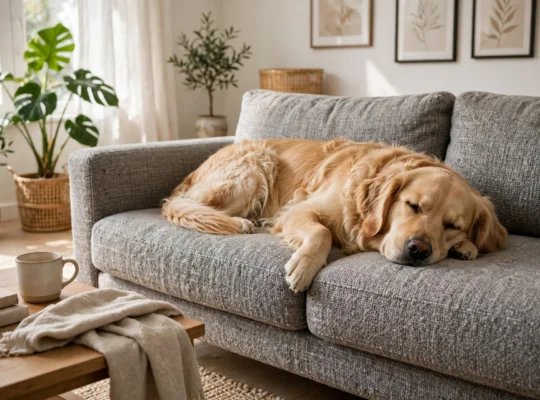
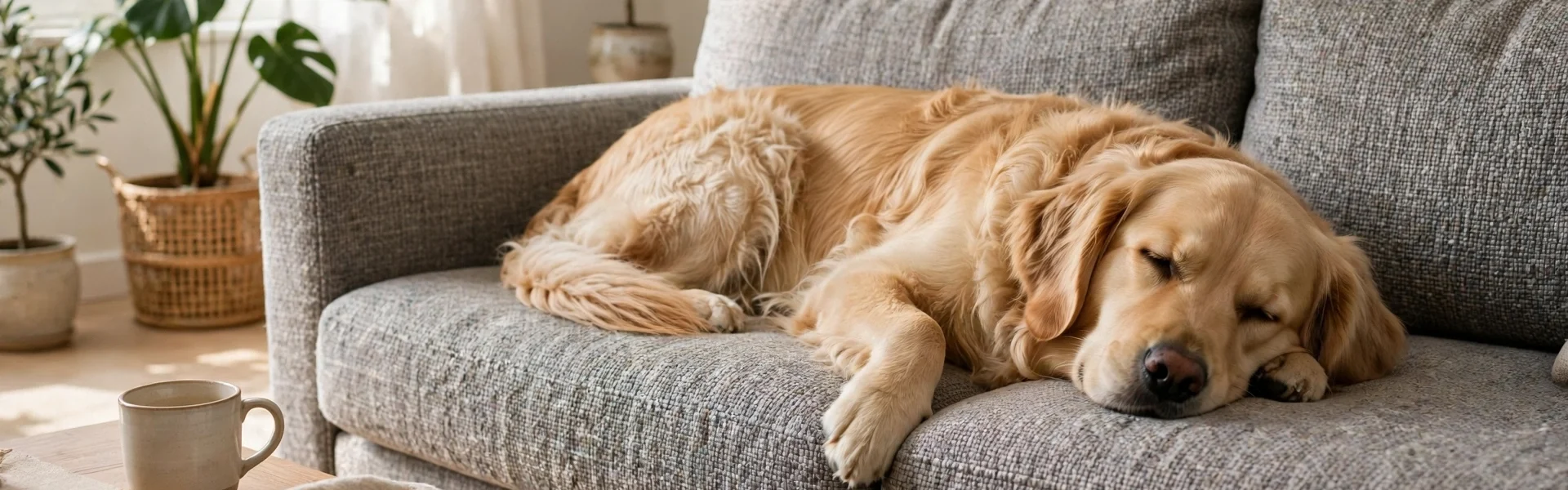
Colour and pattern do more to hide pet hair than any fabric choice. A medium toned, multi coloured pattern, such as a subtle tweed, a geometric print or a textured weave in a grey or navy blend, will do more to camouflage the inevitable small stains and pet hair than any solid, light coloured fabric ever could. Mid tone colours and subtle patterns hide hair and paw prints far better than very dark or very light solids, which show every hair. Match the sofa colour to your pet where you can: a grey sofa for a grey cat, a mid brown sofa for a golden dog, and a patterned fabric for a household with more than one pet.
What do sofa cleaning codes mean?
| Code | Meaning | Cleaning |
|---|---|---|
| W | Water based cleaners | Clean with water based solutions |
| S | Solvent cleaners | Clean with dry cleaning solvents only |
| WS or SW | Water or solvent | Either water or solvent cleaners |
| X | Vacuum only | Vacuum and light brushing only, no liquid |
Look for a cleaning code of W or S/W when you buy a pet friendly sofa, since those are the most forgiving after accidents. A code of S means water will stain the fabric, so it suits homes without pets better, and a code of X means the fabric should never be wet cleaned, which is impractical with animals. The code is usually on a tag under the seat cushions, so check it before you buy, not after the first accident.
How do you care for a pet friendly sofa?
Vacuum fabric weekly to prevent hair buildup, and use a rubber glove or a damp cloth to lift embedded hair from the weave. Blot accidents at once, never rub, and clean with the method the cleaning code allows. Wash removable covers on a cool cycle and air dry them, and keep a washable throw on the seat your pet uses most, since it is easier to wash a throw than a sofa. Trim your pet's claws regularly, since short claws snag less, and keep a lint roller by the sofa for quick daily hair removal. For a full fabric care routine, see our fabric care and clothing storage guide and our upholstery fabric guide.
What are the common myths about pet friendly sofas?
Leather is always the best choice for pets. Not necessarily. Leather is excellent for hair and odours, but it shows scratches, and a performance microfiber or Crypton fabric can be a better choice for a household with large, active dogs. A high double rub count guarantees a pet proof sofa. Not quite. Double rubs measure abrasion, not stain resistance or claw snagging, so check the weave, the fibre and the cleaning code as well. Stain resistant fabric never needs cleaning. Wrong. Even Crypton and Sunbrella need regular vacuuming and prompt cleaning after accidents, since dirt left on the surface eventually grinds into the weave. Dark sofas hide pet hair best. Not true. Very dark solids show light hair clearly, while mid tone patterns hide hair far better than any solid colour.
Frequently Asked Questions
What is the best sofa fabric for dogs? Top grain leather, performance microfiber, branded performance fabrics such as Crypton and Revolution, and tightly woven indoor outdoor weaves such as Sunbrella. Look for at least 30,000 double rubs and a cleaning code of W or S/W.
Is leather or fabric better for a sofa with pets? Leather is best for hair and odour resistance and for wipe clean ease, while performance fabric is best for claw resistance and for homes where scratches would show. Top grain leather with a protective finish offers the best balance for most households.
What double rub rating do I need for a sofa with pets? Aim for at least 30,000 double rubs, and 40,000 to 50,000 if you also have kids. A residential minimum is around 15,000, but that is too low for a home with active pets.
Can I use bleach on a pet friendly sofa? Only on solution dyed acrylics such as Sunbrella, which are bleach cleanable. Never use bleach on leather, microfiber, Crypton or Revolution, since it can damage the finish or the fibre.
How do I remove pet hair from a fabric sofa? Vacuum weekly with an upholstery attachment, then use a damp rubber glove or a lint roller for embedded hair. A tight weave and a mid tone pattern make this far easier than a loose weave or a light solid colour.
Related Reading: Upholstery Fabric Guide | Fabric Care and Clothing Storage Guide | Waterproof Fabric Guide | Types of Fabric Guide 2026
Written by the Textile Conservancy team. We write practical, UK focused fabric guides based on published standards and labelling rules, and we check our facts against the sources named in each guide.