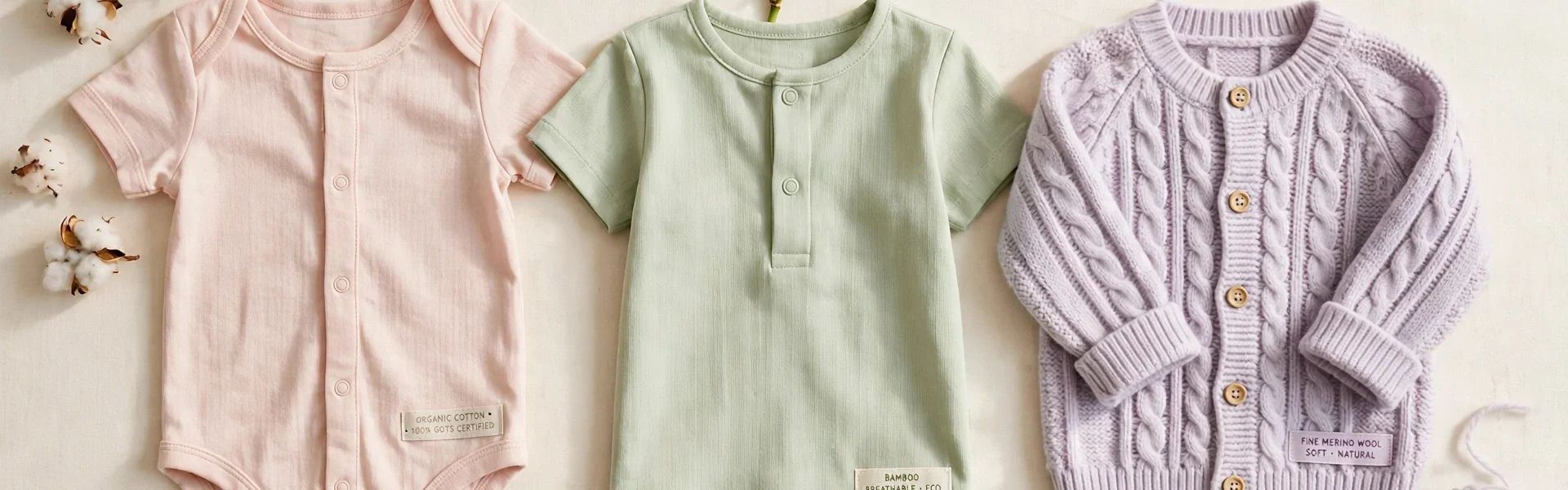

Organic cotton is the best all-round fabric for baby clothes: soft, breathable, easy to wash and widely available, and certified organic cotton keeps chemical residues away from delicate skin. Bamboo viscose suits very sensitive skin, fine merino wool warms best in cold weather, and TENCEL lyocell suits hot days. The right fabric depends on the use.
A baby's skin is thinner than an adult's and loses moisture faster, so rough fibres and chemical finishes cause more irritation on a baby than they would on an adult. That is why fabric choice matters more for babies than for older children. The best baby fabrics share three qualities: they breathe, they feel gentle against delicate skin, and they stay soft after repeated washing.
What makes a fabric good for baby clothes
Four things decide whether a fabric suits a baby. Breathability comes first, because a fabric that traps heat and moisture can cause heat rash and restless sleep. Softness matters next, because seams, stiff weaves and short fibre ends rub against thin skin all day. Washability matters more than most parents expect, since baby clothes are washed constantly and a fabric that goes rough, shrinks or loses shape after a few washes is poor value. Finally, chemical safety matters, because dyes, finishes and flame retardant treatments sit against the skin for hours. A fabric that scores well on all four is a safe buy, and a fabric that fails on one can still work for a single use, such as a warm outer layer worn over a cotton base.
Which four fabrics are best for baby clothes?
| Fabric | Best for | Softness | Breathability | Care | Watch out for |
|---|---|---|---|---|---|
| Organic cotton | Everyday wear, sleepwear, newborns | Soft, gets softer with washing | Excellent | Machine wash warm, tumble dry low | Check for GOTS or OEKO-TEX certification |
| Bamboo viscose | Very sensitive skin, warm days | Silkiest feel of the four | Good, but dries slowly | Gentle cycle, avoid high heat | Loses shape faster, most "bamboo" is rayon |
| Fine merino wool | Cold weather, sleep, outdoor layers | Soft when fibres are under 20 microns | Excellent, regulates temperature | Cold wash, wool cycle, dry flat | Costs more, needs careful washing |
| TENCEL lyocell | Hot days, humid weather, sensitive skin | Smooth and cool to the touch | Very good, wicks moisture | Machine wash gentle, avoid high heat | Less widely available, check the label |
Organic cotton
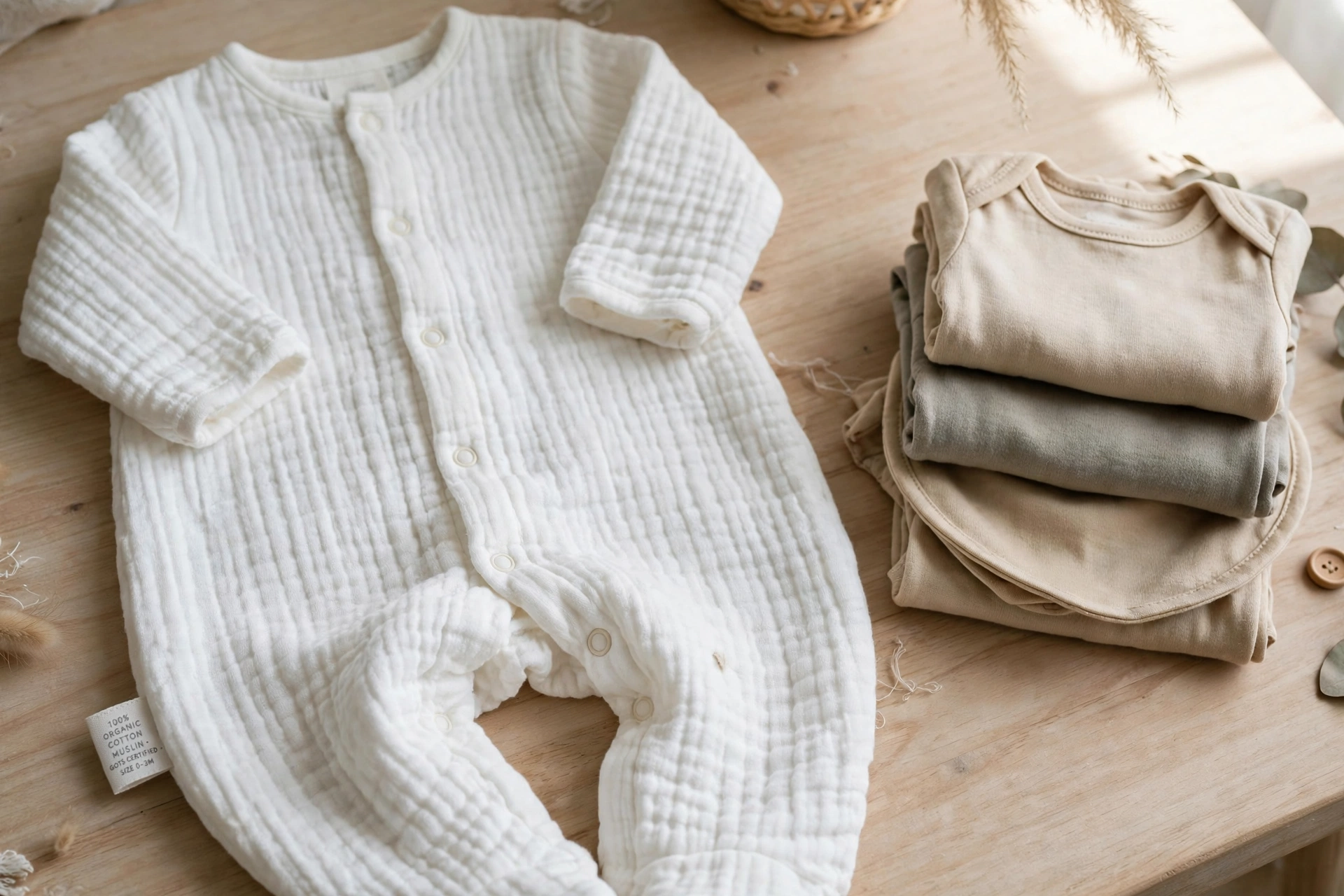
Organic cotton is the safest default choice for baby clothes. It is grown without synthetic pesticides or fertilisers, so fewer chemical residues touch your baby's skin from the first wear. The fibre is naturally breathable, it wicks moisture away from the skin and allows air to circulate, which helps prevent heat build-up and heat rash. Long staple cotton in a jersey or rib knit is the smoothest option, because longer fibres leave fewer short ends to create surface roughness. Cotton also survives the wash better than the other fabrics here, and it holds its softness wash after wash. Choose certified organic cotton where you can, and look for the GOTS label, which is explained below. For a fuller introduction to fibre types, see our types of fabric guide.
Bamboo viscose
Bamboo viscose is the silkiest fabric in this guide, and many parents of babies with very sensitive skin choose it for that reason. It drapes well, feels cool to the touch and regulates temperature well. Read the label carefully, because most textiles sold as bamboo are really rayon: the fibre is made from bamboo pulp processed into rayon, and trading rules require it to be labelled as rayon or rayon made from bamboo. Claims that the fabric keeps bamboo's natural antimicrobial properties need proof the seller can show, so treat unproven claims with care. Bamboo viscose also has practical downsides: it loses shape faster than cotton, especially in thin knits, it absorbs moisture well but dries slowly, which matters for overnight wear, and it tends to pill. For swaddling or everyday bodysuits, cotton holds up better.
Fine merino wool
Many parents assume wool is scratchy or too warm for babies, but fine merino is different. Quality merino wool has a fibre diameter of 17 to 24 microns, and at that fineness it does not trigger the itch response that coarser wool does. Fibres under 20 microns feel soft rather than scratchy. Merino is naturally temperature regulating, so it keeps a baby warm when it is cold and cool when it is warm, and it wicks moisture and resists odour. It is the best choice for cold weather base layers and sleep, especially for babies who react to synthetic fleece. The trade-offs are price and care: merino costs more up front and needs a cold wash on a wool cycle, then drying flat. Never use a hot wash or tumble dryer on merino, because agitation and heat cause felting.
TENCEL lyocell
TENCEL is a brand name for lyocell, a fibre made from wood pulp, usually eucalyptus, in a closed loop process. The resulting fabric is smooth, cool and moisture wicking, which makes it a strong choice for hot days and for babies with sensitive skin. It sits close to bamboo viscose in feel but is generally more durable. Check the label for the TENCEL name or a generic lyocell description, and prefer blends with cotton for everyday baby clothes, since pure lyocell can be less widely available and harder to find in baby sizes.
Which fabric is best for each use?
| Use | First choice | Second choice | Avoid |
|---|---|---|---|
| Sleepwear and sleepsuits | Organic cotton jersey or muslin | Fine merino in winter | Heavy polyester fleece next to skin |
| Everyday bodysuits and vests | Organic cotton | Cotton and bamboo blend | Rough seams, stiff denim, scratchy labels |
| Outerwear and cold days | Fine merino base layer plus cotton outer | Fleece over a cotton base layer | Wool that is not fine merino, worn next to skin |
| Hot summer days | Organic cotton muslin or TENCEL | Bamboo viscose | Thick synthetic fabrics that trap heat |
| Sensitive or eczema prone skin | Certified organic cotton | Bamboo viscose or fine merino | Polyester or acrylic blends, harsh finishes |
Sleepwear deserves extra care. A sleepsuit sits against the skin all night, so choose a soft, breathable fabric and a simple design with flat seams. In winter, a fine merino base layer under a cotton sleepsuit keeps a baby warm without overheating. In summer, a single layer of cotton muslin is usually enough, and you can add a light cellular blanket rather than a heavier garment. Sleep bags also carry a TOG rating, and the maker gives a room temperature guide for each rating, so follow that guide rather than guessing. For more on light, airy fabrics for warm weather, see our breathable summer fabric guide.
Which fabric is best for sensitive skin or eczema?
If your baby has eczema or very reactive skin, fabric choice can help, but it does not replace medical advice, so speak to your GP or health visitor about any rash that does not settle. In general, start with 100 percent organic cotton in a smooth jersey or rib knit, since it is breathable, predictable in the wash and free of pesticide residues when certified. Bamboo viscose and fine merino are the usual next choices: bamboo for its silky feel and temperature regulation, merino for cool or changeable weather, worn as a base layer. Avoid blends that mix natural fibres with polyester or acrylic, because even a small synthetic content can trap moisture and trigger irritation in eczema prone babies. Wash new clothes before the first wear, use a fragrance free, dye free detergent, and skip fabric softener, which can leave a residue on the fabric. Remove scratchy tags or choose tag free garments, since a rough label can irritate a baby's neck all day.
Which certifications matter for baby clothes?
Two labels do most of the work when you are choosing baby clothes. GOTS, the Global Organic Textile Standard, certifies that the fibre is organic and that processing, including dyeing and finishing, meets its environmental and chemical criteria. A GOTS label names its certification body and a certification number you can look up in the GOTS public database. OEKO-TEX Standard 100 tests the finished garment, including every thread, button and accessory, against a list of over 1,000 harmful substances. Product Class I covers articles for babies and children up to 3 years and has the strictest limit values of all the classes. An OEKO-TEX label number can be checked in the OEKO-TEX Label Check tool. Look for both certifications when you can: GOTS guarantees organic materials, and OEKO-TEX confirms those materials have been tested for safety. For help judging labels and claims when you shop, see our sustainable fabric shopping guide.
What safety labels should baby sleepwear have in the UK?
The UK has specific rules for children's nightwear, and the labels on sleepwear tell you what you need to know. Under the Nightwear (Safety) Regulations 1985, children's nightwear must meet the flammability performance requirements of British Standard BS 5722 after washing, except for babies up to three months old with a chest measurement of 53 cm or less, pyjamas, and cotton terry towelling bath robes. Garments that do not meet the requirements must carry a label printed in red stating KEEP AWAY FROM FIRE. Garments that do meet the requirements carry a label stating LOW FLAMMABILITY TO BS 5722 in black text. Nightwear treated with flame retardant chemicals must also carry a label stating DO NOT WASH AT MORE THAN 50 DEGREES C. CHECK SUITABILITY OF WASHING AGENT. The standard BS EN 14878 covers the burning behaviour of children's nightwear for children under 14. In practice, check the label before you buy, choose pyjamas or sleepsuits that fit well rather than loose nightdresses for babies, and keep nightwear away from open fires and heaters whatever the label says.
How to wash baby clothes
| Fabric | Water | Cycle | Drying |
|---|---|---|---|
| Organic cotton | Warm | Normal or gentle | Tumble dry low or line dry |
| Bamboo viscose | Cool to warm | Gentle | Line dry, avoid high heat |
| Fine merino wool | Cold | Wool cycle | Lay flat to dry, never tumble dry |
| TENCEL lyocell | Cool to warm | Gentle | Line dry or tumble dry low |
Wash baby clothes with a fragrance free, dye free detergent on a gentle cycle, then double rinse when your baby has sensitive skin. Wash new clothes before the first wear to remove finishing chemicals and loose fibres. Close poppers and turn garments inside out to protect prints and reduce pilling. For merino, use a wool wash detergent, never use hot water, and reshape the garment while it is damp before laying it flat. For full washing and storage guidance, see our fabric care and clothing storage guide.
Which fabrics should you avoid for baby clothes?
Heavy polyester and acrylic are the main fabrics to avoid next to a baby's skin, because they do not breathe as well as natural fibres and can trap heat and moisture. That matters most in sleepwear and in summer. Rough or stiff fabrics, raised prints that crack, scratchy neck labels and exposed elastic also cause problems, so feel the inside of a garment and check the seams before you buy. Be careful with very cheap multipacks that do not name their fibre content clearly: the label should state the fibre names and percentages, so a garment that only says "soft feel" without a composition is not a good buy. Finally, treat claims such as antibacterial bamboo or chemical free with care unless the label carries a recognised certification you can verify, as explained above.
Frequently Asked Questions
What is the best fabric for baby clothes? Organic cotton is the best all-round choice for baby clothes, because it is soft, breathable, durable and easy to wash. Bamboo viscose feels silkier and suits very sensitive skin, fine merino wool is best for cold weather, and TENCEL lyocell suits hot days.
Is bamboo fabric safe for babies? Yes, bamboo viscose is generally safe and very soft, but read the label: most bamboo textiles are rayon made from bamboo pulp, and the fabric loses shape faster than cotton. Choose certified bamboo viscose and wash it gently.
Is merino wool safe for babies with eczema? Fine merino wool can be safe and even helpful for some babies with eczema, because it regulates temperature and wicks moisture away from the skin. Choose fibres under 20 microns, wear it as a base layer, and check with your GP or health visitor first.
What certifications should I look for on baby clothes? Look for GOTS for organic fibre and processing, and OEKO-TEX Standard 100 Product Class I, which covers babies and children up to 3 years and has the strictest limits. Both label numbers can be checked in their public databases.
How should I wash baby clothes for sensitive skin? Wash with a fragrance free, dye free detergent in warm water on a gentle cycle, then double rinse. Wash new clothes before the first wear, skip fabric softener, and dry merino flat instead of tumble drying.
Related Reading: Types of Fabric Guide 2026 | Breathable Summer Fabric Guide | Fabric Care and Clothing Storage Guide | Sustainable Fabric Shopping Guide UK | Waterproof Fabric Guide
Written by the Textile Conservancy team. We write practical, UK focused fabric guides based on published standards and labelling rules, and we check our facts against the sources named in each guide.