Hemp Fabric Guide: A Complete UK Guide to Properties, Care and Buying

Hemp fabric is a strong, breathable cloth woven from the bast fibres of the industrial hemp plant, and it suits summer clothing, bedding and hard-wearing home textiles. It is tougher than cotton, softens with every wash, and needs little water to grow. Buy it with a stated fibre percentage and a GOTS or OEKO-TEX label.
What is hemp fabric?
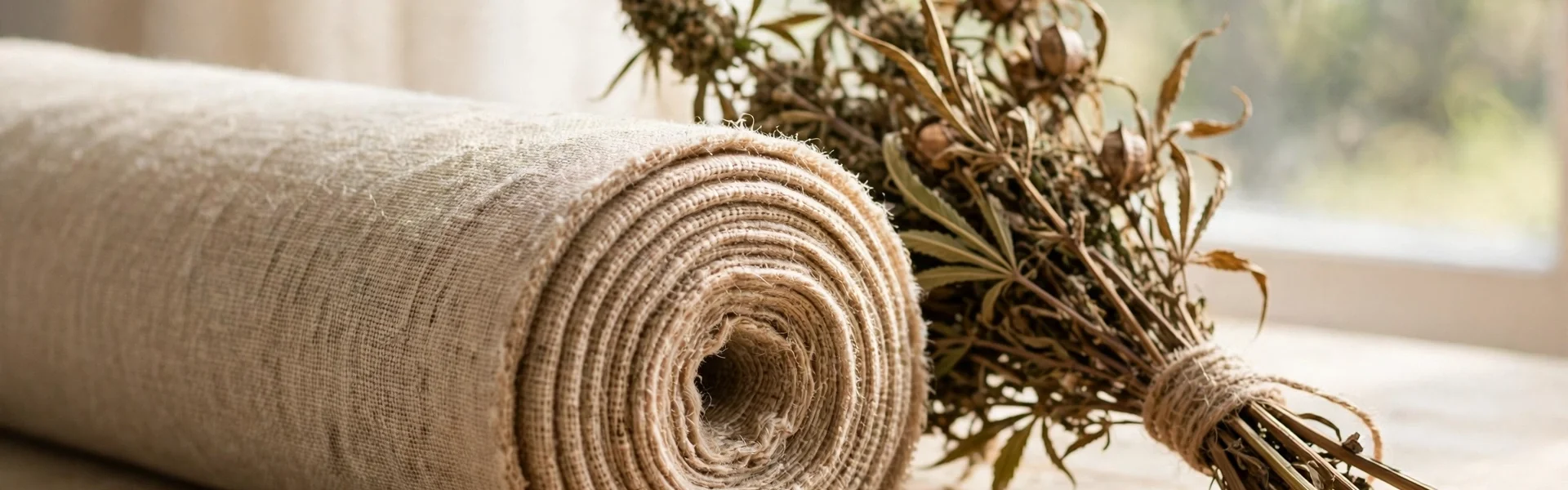
Hemp fabric is cloth made from the long bast fibres found in the stalk of the industrial hemp plant, Cannabis sativa L. Bast fibres are the strong strands that run through the stem, the same family as linen, which comes from flax. Industrial hemp is a low-THC cultivar grown for fibre, seed and oil, not for its psychoactive content, and hemp textiles are sold legally in the UK. The fibre has been used for centuries for rope, sails and canvas, and it is now woven into shirts, dresses, bedding, curtains, upholstery and bags.
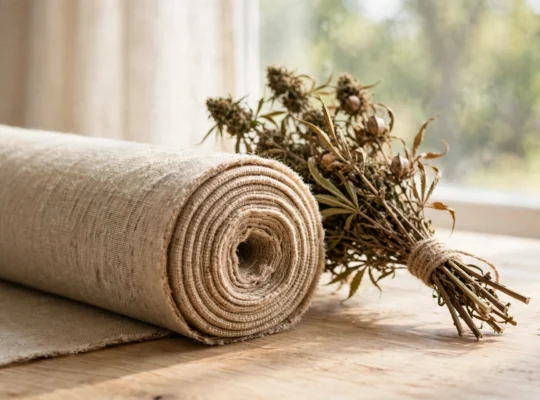
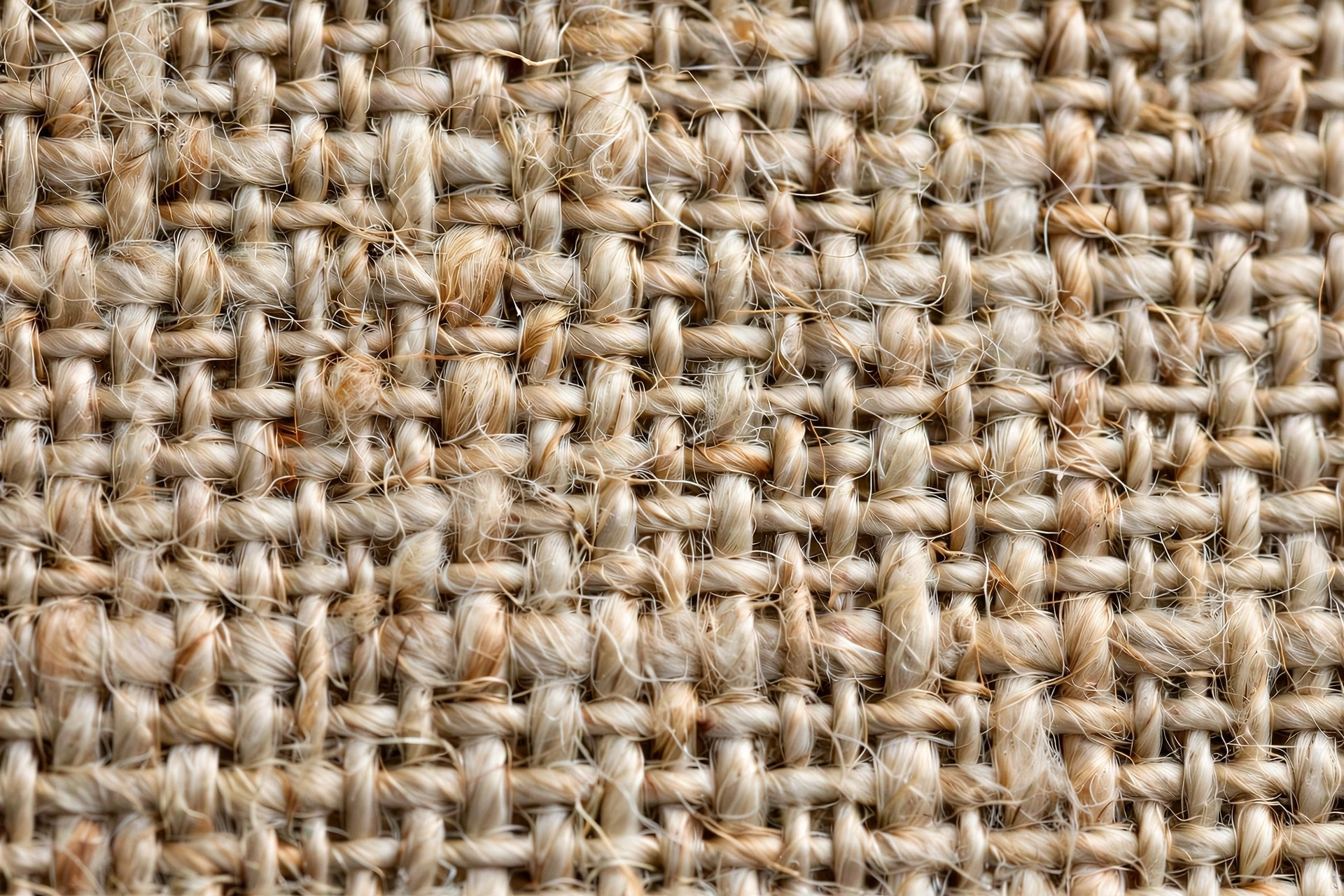
A hemp fibre is mostly cellulose, typically 55 to 78 percent, with 14 to 22 percent hemicellulose and 3 to 10 percent lignin, plus a little pectin. High quality hemp fibre can reach 80 to 90 percent cellulose. That chemistry explains most of what the fabric does: cellulose gives it strength and absorbency, while lignin gives it stiffness and UV resistance, which is also why new hemp can feel rough before it is washed. The fabric has a visible slubby texture, a little like linen but usually coarser, with a warm natural colour in undyed cloth. Most hemp fabric on the UK market is either pure hemp or a blend, most often hemp with cotton or hemp with linen, because blends soften the hand and make the fibre easier to spin into fine yarns.
What are the properties of hemp fabric?
Hemp is one of the strongest natural fibres you can buy. A technical white paper on industrial hemp yarn puts hemp fibre tensile strength at 300 to 800 MPa, against 287 to 597 MPa for cotton, and notes that hemp fabrics are very durable. In a simulated grab test, a 12 oz hemp canvas broke at 1100 Newtons, against about 750 Newtons for a 12 oz cotton duck canvas of the same weight. Hemp also gets stronger when wet, because water swells the cellulose and the microfibrils align more closely, so it survives repeated washing well. The table below summarises the properties that matter in daily use.
| Property | Hemp fabric | What it means for you |
|---|---|---|
| Tensile strength | 300-800 MPa, stronger than cotton | Garments and home textiles last longer and resist tearing |
| Moisture absorption | About twice cotton | Wicks sweat away, stays comfortable in warm weather |
| Breathability | High, porous fibre structure | Cool in summer, does not trap heat |
| UV resistance | UPF 55-60 for untreated tight weave | Sun protection for the wearer, fabric resists sun damage |
| Mould and mildew | Naturally resistant | Good for damp rooms, outdoor cushions and towels |
| Antibacterial | Naturally antimicrobial | Less odour, suits sensitive skin and bedding |
| Shrinkage | 3-5 percent on first wash | Pre-wash before sewing or first wear |
| Softening | Improves with every wash | Feels better after a few washes, not worse |
| Wrinkle tendency | High, lower than linen | Creases, but less sharply than linen |
| Weight range | 200 to over 500 GSM for canvas | Light shirting to heavy upholstery and bags |
The moisture figures deserve a note. Hemp absorbs roughly twice as much moisture as cotton and releases it quickly, which is why hemp shirts feel cool and dry in summer and hemp towels dry fast on the line. The UV figure comes from a simulated test on untreated, tightly woven hemp canvas, which scored a UPF of 55 to 60, so a looser weave or a lighter cloth will protect less. Mould resistance and antibacterial behaviour are natural properties of the fibre, not a chemical finish, which is one reason hemp suits bedding and towels. For a wider view of fabric types, see our types of fabric guide.
How is hemp fabric made?
The path from stalk to cloth has five main stages, and each one affects how the finished fabric feels. First comes retting, which breaks down the pectin that binds the fibre bundles to the woody core of the stalk. Dew retting spreads the stalks in the field for 14 to 28 days, letting dew and microbes do the work; it is the most common method and also the most variable. Water retting submerges the stalks for 7 to 14 days, which is faster and more uniform but uses a lot of water and produces wastewater. Chemical or enzymatic retting, using alkali or pectinase in factory tanks, is the fastest and most consistent, at a higher cost.
Second is decortication, the mechanical separation of the retted bast fibre from the woody core, called the hurd, using rollers, breakers and scutchers similar to flax equipment. Third is degumming, which removes further non-cellulosic residues by alkali scouring or enzymatic treatment. Fourth is spinning: long fibres go through the linen system, while short fibres are cottonised, cut and processed on cotton spinning machinery so they can be spun into fine yarns and blended with cotton. Fifth is finishing, which can include enzyme softening to remove residual lignin and pectin, and mild bleaching for lighter colours. The quality of the retting decides how much lignin and pectin remain on the fibre surface, which is why two hemp fabrics can feel very different even at the same weight.
How does hemp compare with linen and cotton?
Hemp, linen and cotton are the three natural fibres most people reach for in similar situations: breathable summer clothing, bedding and home textiles. They differ most in strength, wrinkling and care, not in breathability, which is high in all three. Linen and hemp are both bast fibres, with long strands of cellulose arranged almost parallel to the fibre axis, which gives very high tensile strength but also stiffness. Cotton is a seed fibre, shorter and spirally twisted, which gives it natural softness and elasticity but lower tensile strength. The table below compares them side by side.
| Feature | Hemp | Linen | Cotton |
|---|---|---|---|
| Strength | Very high | Very high | Moderate |
| Softness off the bolt | Firm, breaks in with washing | Crisp, softens with use | Soft immediately |
| Breathability | High | Highest | High |
| Moisture absorption | About twice cotton | High | Good |
| Wrinkle tendency | High, lower than linen | Very high, sharp creases | Moderate |
| Shrinkage | Moderate to high, 3-5 percent first wash | 4-10 percent | Typically 4-8 percent |
| Ironing temperature | 200-220C | 200-220C | 150-160C |
| Water to grow | Very low | Low | High |
| Best for | Hard-wearing clothing, bags, upholstery | Bedding, table linen, summer clothing | Everyday soft garments, towels |
In practice, hemp sits between linen and cotton. It is nearly as strong as linen but slightly thicker and less uniform, so it wrinkles noticeably less than linen, though still more than cotton. It holds its shape better than linen under repeated washing, which makes it the tougher choice for high-wear items such as aprons, bags and workwear. Cotton wins where immediate softness and predictable drape matter, and where a garment will be washed hot and often. A hemp cotton blend splits the difference: a 55 percent hemp and 45 percent cotton cloth is softer than pure hemp and more durable than pure cotton, and it is one of the most common blends on the market. For summer clothing specifically, our lightweight dress fabric guide covers hemp alongside other warm-weather fabrics.
What is hemp fabric best used for?
Hemp suits anything that needs to last, breathe and take washing. Clothing is the most common use: shirts, dresses, trousers, jackets and underwear, especially in summer, where the breathability and moisture wicking pay off. Hemp canvas, from about 200 GSM up to over 500 GSM, is used for tote bags, backpacks, shoes, upholstery and heavy curtains. Hemp bedding is growing in popularity because the fabric is cool, antibacterial and softens with use, and hemp towels dry quickly and resist mildew. The table below gives a starting point for each use.
| Use | Best hemp type or weight | Why it works |
|---|---|---|
| Summer shirts and dresses | Lightweight pure hemp or hemp cotton blend, 120-200 GSM | Breathable, wicks sweat, softens with wear |
| Bedding and sheets | Medium weight hemp or hemp cotton, 150-250 GSM | Cool, antibacterial, softer after every wash |
| Towels | Hemp cotton blend | Absorbent, quick drying, mould resistant |
| Curtains and home textiles | Medium to heavy hemp, 200-350 GSM | Strong, drapes well, resists sun damage |
| Upholstery and cushions | Heavy hemp canvas, 300-500 GSM | Very abrasion resistant, holds shape |
| Bags and workwear | Heavy hemp canvas, 300-500 GSM | Tough, tear resistant, long service life |
Hemp is a poor choice where you need stretch, a very smooth drape, or a fabric that stays crisp without ironing. It has almost no natural stretch, so pure hemp suits relaxed cuts rather than fitted garments, and it creases, so it suits a relaxed, textured look rather than formal tailoring. If you need stretch, look for a hemp blend with a small percentage of elastane, and check the label, because the elastane changes the care and the recycling story. For help choosing fabrics for the home generally, see our sustainable fabric shopping guide.
Why does hemp fabric feel rough at first, and how does it soften?
New hemp often feels stiff, coarse or papery, and this puts many buyers off. The roughness is not a defect and it is not an allergy: it comes from the lignin and pectin left on the fibre after retting. Raw hemp retains about 2 to 5 percent lignin and 0.8 to 2.5 percent pectin after retting. Lignin is the rigid polymer that gives wood its stiffness, and pectin is the biological glue that binds the fibre bundles to the stalk. Neither bonds permanently to the cellulose, so hot water, agitation and alkaline detergent progressively dissolve and remove them over repeated washes, leaving a softer, more flexible fabric behind. The softening is not a sign of the fabric wearing out; it is the stiff non-cellulosic parts leaving, while the cellulose fibre itself stays strong.
How long it takes depends on the finish. Enzyme washed hemp, treated industrially with pectinase or cellulase, reaches its final hand feel in about 5 to 10 wash cycles, with the biggest change in the first 3 to 5 washes. Raw or greige hemp takes 10 to 20 cycles to soften noticeably and 25 or more to reach its final state. You can speed it up at home by washing in warm water at 40 to 50C, which swells the fibre and dissolves residual pectin faster, and by adding half a cup of white vinegar to the rinse to remove hard water deposits. Do not use commercial fabric softener: it coats the fibre with a hydrophobic film and works against the natural softening, which comes from washing, not from a coating. If a hemp garment still feels scratchy after a few washes, that is normal for raw hemp; give it a few more cycles before judging it.
How do you wash and care for hemp fabric?
Hemp is low maintenance once you know the rules, and it is one of the few fabrics that gets stronger when wet and softer with every wash. Always read the care label first, because blends follow different rules from pure hemp. The routine below covers most hemp clothing and home textiles.
Wash pure hemp in the machine on a gentle cycle at 30 to 40C with a mild, pH-neutral detergent. A 40 to 60C wash is fine for pure hemp, but for hemp cotton blends 40C is safer, because the cotton part may shrink more than the hemp part in heat. Avoid chlorine bleach: it damages cellulose fibres and roughens the surface, and hemp does not need it. Oxygen bleach is the safer option if you must bleach a white or semi-bleached hemp. Avoid fabric softeners, which coat the fibre and reduce moisture absorption. Pre-wash new hemp fabric before first wearing or sewing, because it shrinks 3 to 5 percent on the first wash, and that shrinkage is mostly mechanical: the yarns relax from the tension introduced during weaving. Pre-shrunk or sanforised hemp is usually held below 2 percent, but check the label rather than assuming it.
Dry hemp by air drying flat or on the line, which is the single easiest habit for extending its life. Hemp dries quickly, so line drying is practical even in the UK. If you use a dryer, choose low heat and remove the item while slightly damp, because high heat can shrink and stiffen the fibre. Iron hemp at 200 to 220C while the fabric is still slightly damp: high heat and steam smooth out creases faster than dry ironing, and hemp tolerates higher ironing temperatures than cotton because the lignin in the fibre raises its thermal threshold. Hemp does not felt, because it has no scale structure on the fibre surface like wool, so you do not need to fear felting in the machine. For stains, spot clean with a gentle detergent before washing, rinse well, and remember that leftover soap can leave brown marks on hemp through cellulose oxidation, so a thorough rinse matters. For more on keeping fabrics in good condition, see our fabric care guide.
What should you look for when buying hemp fabric?
Buying well matters more with hemp than with cotton, because the label tells you what the marketing does not. Check these five things before you buy.
First, the fibre percentage. Look for at least 50 percent hemp if you want the durability, breathability and moisture handling that make hemp worth buying. A 55 percent hemp and 45 percent organic cotton blend is a good balance. Avoid products that say only "hemp blend" without disclosing exact percentages, because a cloth with 5 percent hemp behaves like whatever the other 95 percent is.
Second, the certification, and read it for what it actually covers. GOTS, the Global Organic Textile Standard, covers organic fibre content plus processing, dye and wastewater criteria across the whole supply chain, and it is the stricter, more textile-specific mark. OEKO-TEX Standard 100 tests the finished article, including thread and buttons, against a list of over 1,000 harmful substances, but it says nothing about whether the fibre was grown organically. USDA Organic applies to the farming of the fibre, not to working conditions or dye chemistry. No single mark covers everything, so the safest buy is a garment that names both its fibre and its certifier.
Third, remember that hemp does not mean organic. Conventional hemp can still be grown with pesticides, so if organic fibre matters to you, look for the word organic plus a certifier name, not just the fibre name. The same caution applies to sustainability claims generally: some life cycle rankings put organic hemp in the top class and standard hemp lower, because processing, dyeing and finishing matter as much as the crop.
Fourth, the origin and the maker. The major hemp producers are China, France, Romania and the US, and EU made garments often follow stricter environmental rules. A brand that names its farm region, its mill or its dyehouse is easier to trust than one that says only "sustainable". Fabric composition is legally required on garment labels in the UK, so if a brand will not tell you what its clothes are made of, that tells you everything.
Fifth, the weight and the weave. Check the GSM: lightweight hemp around 120 to 200 GSM suits shirts and dresses, medium weights around 200 to 300 GSM suit curtains and bedding, and heavy canvas above 300 GSM suits bags and upholstery. Feel the cloth if you can: a tight, even weave with a slubby texture is typical of good hemp, while a very loose weave will stretch and sag. And expect to pay more than cotton. Hemp is slightly more expensive, and worth it for items you will wash and wear for years, because the cost per wear falls as the fabric outlasts cotton.
Frequently Asked Questions
Is hemp fabric soft? Not at first. New hemp feels firm or rough because of residual lignin and pectin, but it softens with every wash as those wash out. Enzyme washed hemp reaches a soft hand in about 5 to 10 washes, while raw hemp can take 25 or more. After breaking in, it feels like a mid-weight cotton with more texture.
Does hemp fabric shrink? Yes, by about 3 to 5 percent on the first wash, mostly because the yarns relax from weaving tension. Pre-wash new hemp before sewing or first wear, and wash at 30 to 40C with air drying to keep later shrinkage small. Pre-shrunk hemp is usually held below 2 percent.
Is hemp fabric sustainable? Hemp is one of the most sustainable fibres at commercial scale. It grows in 3 to 4 months, needs very little water, hemp grown in the UK needs 500 to 700 mm of water per season, mostly met by rainfall, and it naturally resists pests and improves soil health. One life cycle comparison puts cottonised hemp at about 2,820 litres of water per kg against 4,342 to 6,902 litres for cotton. Processing and dyes still matter, so look for GOTS certification.
Can you machine wash hemp fabric? Yes. Machine wash pure hemp on a gentle cycle at 30 to 40C with a mild, pH-neutral detergent, and air dry. Avoid chlorine bleach and fabric softeners, which damage or coat the fibre. Hemp gets stronger when wet and softer with every wash, so regular washing improves it rather than wearing it out.
Is hemp the same as linen? No, though they are often confused. Both are bast fibres with a slubby, natural look, and both breathe well and soften with use. Hemp is more abrasion resistant, holds its shape better under repeated washing, and wrinkles less sharply than linen. Linen is slightly cooler to the touch and more elegant, while hemp is the tougher choice for high-wear items.
Related Reading: Sustainable Fabric Shopping Guide UK | Types of Fabric Guide 2026 | Fabric Care and Clothing Storage Guide | Lightweight Dress Fabric Guide
Written by the Textile Conservancy team. We write practical, UK focused fabric guides based on published standards and labelling rules, and we check our facts against the sources named in each guide.