Wedding Dress Fabric Guide: Satin, Chiffon, Tulle and Lace Explained

Wedding dress fabric shapes silhouette, formality, comfort and cost, and there is no single best option. Satin and Mikado suit formal winter weddings, chiffon and organza suit warm weather and outdoor ceremonies, crepe suits modern minimalist gowns, and lace adds texture to almost any style. This guide compares the main bridal fabrics, matches them to season, venue and silhouette, and explains how to care for and store the dress afterwards.
How to choose wedding dress fabric
Start with five questions before you fall in love with a fabric. Where and when are you getting married, since an outdoor summer garden and a winter ballroom need very different cloths. What silhouette do you want, since structured shapes need structured fabrics and fluid shapes need fluid ones. How much do you want to move and dance, since heavy satin feels very different from light chiffon after several hours. How will the dress travel, since some fabrics crease badly and others hide creases well. And how will you clean and store it, since delicate fabrics need professional care. Answer those five questions first, and the fabric choice becomes much simpler. For help with the underlying fibre types, see our types of fabric guide.
Main wedding dress fabric types
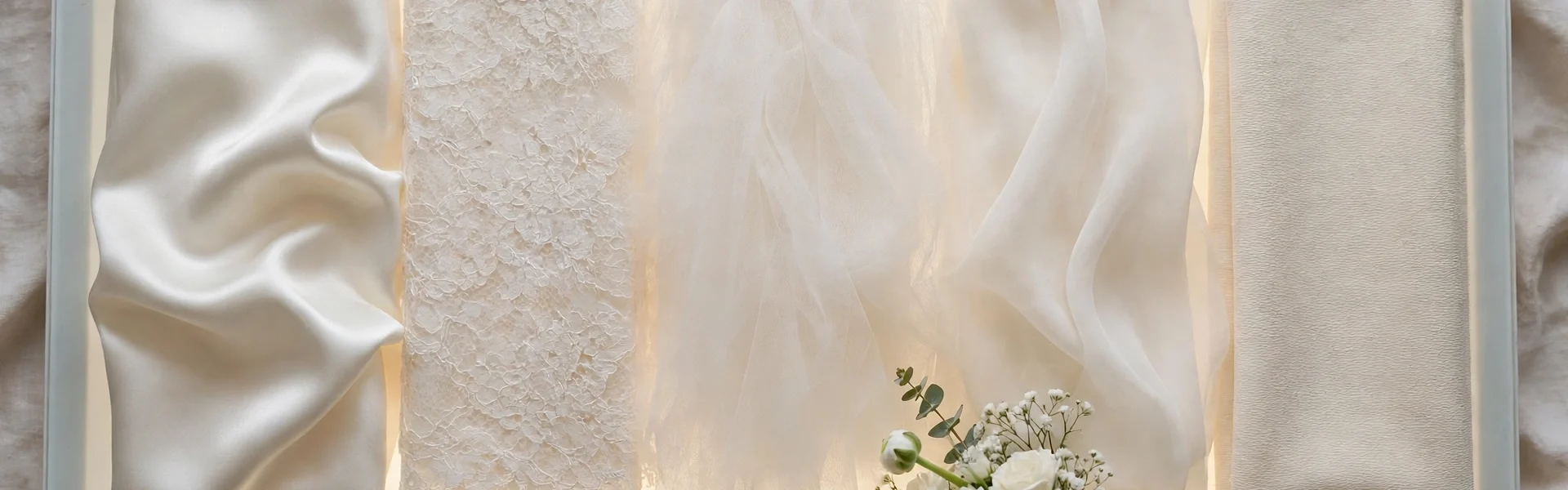
| Fabric | Look and feel | Weight | Best for | Watch out for |
|---|---|---|---|---|
| Satin | Smooth, glossy, structured | Medium to heavy | Formal ballgowns, A-line, classic looks | Warm in heat, shows marks if tight |
| Mikado | Thick satin, crisp, low sheen | Medium to heavy | Architectural ballgowns, fit and flare | Heavy, needs precise seams |
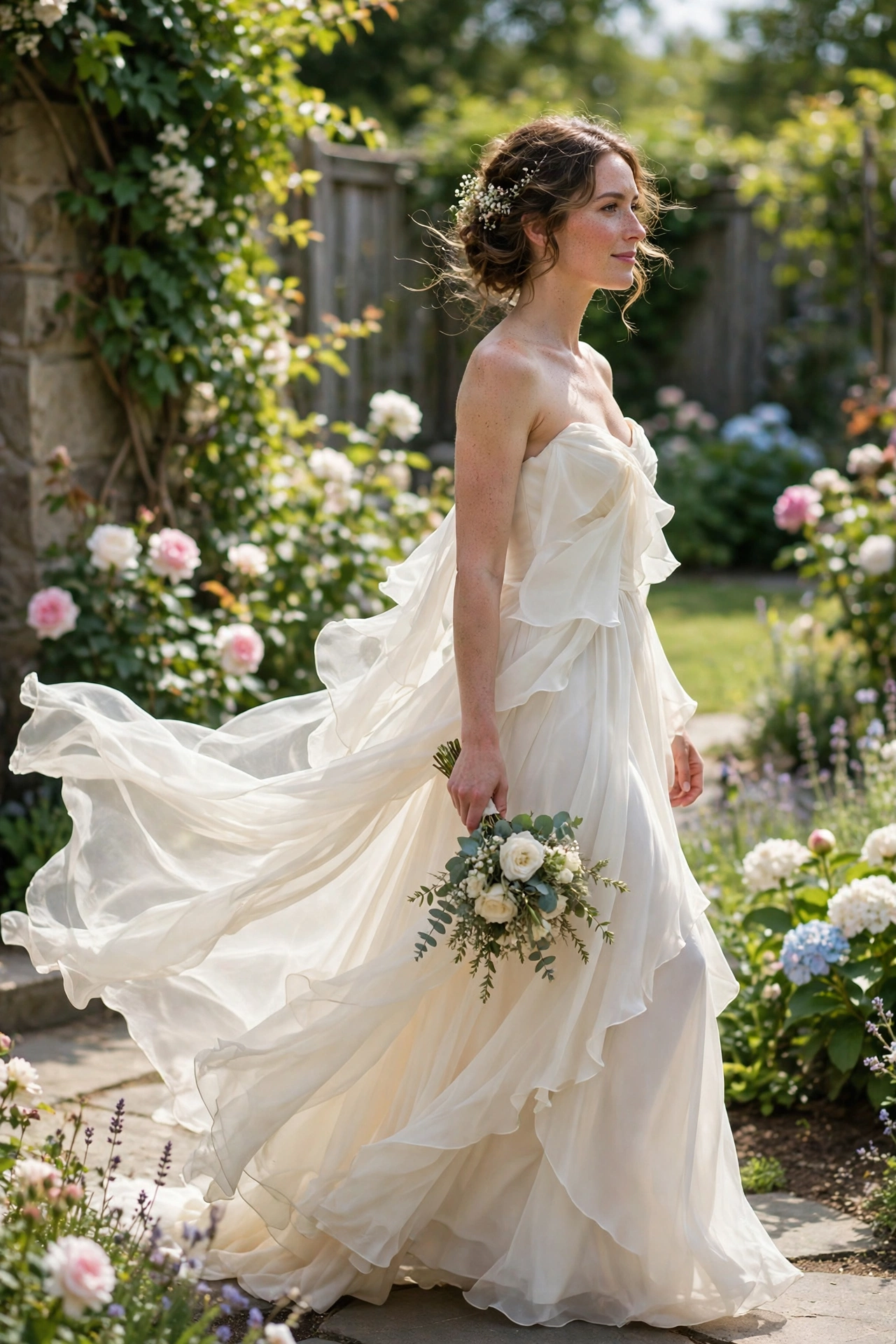
| Chiffon | Airy, sheer, romantic | Very light | Beach, garden, boho, layers | Wrinkles, snags, needs lining |
| Tulle | Net-like, cloud light | Very light | Ballgown skirts, veils, layered volume | Tears if pulled, needs layering |
| Lace | Textured, romantic, detailed | Light to medium | Sleeves, overlays, illusion details | Motif matching in alterations |
| Organza | Crisp, sheer, luminous | Light | Structured layered skirts | Can feel stiff, shows creases |
| Crepe | Clean, matte, modern | Medium | Columns, fit and flare, minimalism | Shows lines, needs smooth underlayers |
| Georgette | Soft, flowing, slightly grainy | Light | Flowing A-line, destination weddings | Needs lining, delicate seams |
Satin and Mikado
Satin is a weave, not a fibre: any yarn, silk, polyester or a blend, woven in a satin pattern produces the smooth, high gloss face and matte back that define the family. Duchess satin is the heaviest bridal variant, typically weighing 300 to 450 grams per square metre at 19 to 22 momme, and it drapes close to the body while reflecting light with a pearly sheen. Mikado is a thicker silk blend fabric, woven to 250 to 350 grams per square metre, with a semi textured, matte to low sheen surface that shapes rather than drapes. Mikado holds sculptural skirts, pleats and bows, which makes it the choice for architectural ballgowns, while satin suits classic A-line, ballgown and mermaid silhouettes.
Chiffon and georgette
Chiffon is a sheer, lightweight fabric made from silk or rayon, with a soft matte finish and an airy drape. It is the most breathable common bridal cloth, because its open weave allows air circulation that heavier satins and Mikado cannot match, and it is a favourite for beach, garden and destination weddings. Georgette is similar but slightly heavier and grainier, and it flows beautifully in A-line gowns. Both need lining, since they are sheer, and both wrinkle and snag more easily than structured fabrics.
Tulle and organza
Tulle is a fine, sheer netting fabric that adds volume and a romantic, fairy tale quality. Designers commonly layer it into ballgown skirts and veils, and it builds volume without much weight. Organza is a crisp, sheer fabric with more structure than chiffon, and it suits dramatic ballgown skirts and layered silhouettes. Tulle tears if pulled, so handle it gently, and organza can feel stiff and show creases, so it suits structured rather than fluid designs.
Lace and crepe
Lace is an open weave fabric made from silk, cotton or synthetic fibre, and it works as an overlay, bodice detail or full gown, giving a delicate, intricate finish. Fine laces such as Chantilly can be used sparingly for a subtle, contemporary look, while bold, raised guipure lace suits a more traditional gown. Crepe is a soft, matte fabric that drapes close to the body, and brides who want a sleek, modern silhouette without excess shine often favour it. Crepe is consistently popular thanks to its versatility and flattering drape, but it shows lines, so it needs smooth underlayers.
Choosing fabric by season and venue
| Season | Outdoor | Indoor | Notes |
|---|---|---|---|
| Spring | Chiffon, lace over tulle | Crepe, light satin | Layerable, breathable, floral textures |
| Summer | Chiffon, georgette, organza | Crepe, charmeuse | Avoid heavy layers, matte reads cool |
| Autumn | Satin, Mikado, tulle | Lace, crepe | Mix structure and texture, sleeves optional |
| Winter | Satin, Mikado, velvet | Lace on a satin base | Add a bolero or cape, weight adds warmth |
The venue matters as much as the season. Beach and garden weddings suit chiffon, georgette and organza, which are breeze friendly and do not hold heat. Winery and barn weddings suit tulle, lace and crepe, which bring romance and comfort. Cathedral and ballroom weddings suit satin, Mikado and embellished lace, where scale and formality are assets rather than excess. City hall and loft weddings suit crepe and satin columns, which read minimal and architectural. In summer, single layer tulle and chiffon feel cooler, while satin, Mikado and heavily layered tulle are warmer and suit autumn and winter. For more on light, airy fabrics for warm weather, see our lightweight dress fabric guide.
Choosing fabric by silhouette
Structured shapes such as ballgowns want structured fabrics: Mikado, satin and layered tulle hold the shape without extra boning. Fluid shapes such as sheath and A-line gowns suit crepe, chiffon and soft lace, which follow the body rather than imposing a shape. For plus size brides, structured crepe, satin and Mikado provide support, define the waist and smooth curves without adding bulk, and they work best in A-line, fit and flare and structured ballgown shapes. Matte fabrics such as crepe and Mikado photograph with clean lines and no glare, while satin and glitter tulle catch the light, so think about how the fabric will look in photographs as well as in person.
Combining fabrics
Many designers combine a structured base, such as satin, with a lace overlay or tulle skirt, which brings together the strengths of each fabric. A Mikado bodice with a tulle skirt gives structure on top and softness below. A crepe column with a lace overlay adds texture without losing the clean line. A satin ballgown with a chiffon overskirt softens the formality. When you combine fabrics, check that they work together in weight and care: a heavy satin base with a delicate chiffon overlay is fine, but a delicate lace over a heavy Mikado needs careful handling at the seams, since the two cloths behave differently.
Caring for and storing wedding dress fabric
Care depends on the fabric, so store and clean each cloth on its own terms. Satin and silk: avoid direct heat, steam at a distance or use professional pressing. Chiffon and tulle: naturally wrinkle resistant, easy to fluff back into shape after travel. Lace: handle gently to avoid snagging delicate threads. For long term storage, fold structured gowns with acid-free tissue paper, or hang lightweight fabrics, and keep the dress away from direct sunlight and humidity either way. For travel, lace and tulle hide creases well, while satin, Mikado and silk show them most, so hang your gown for 24 to 48 hours after unpacking and steam it lightly. For full washing and storage guidance, see our fabric care and clothing storage guide.
Common myths about wedding dress fabric
Heavier fabric always looks more expensive. Not necessarily. A well cut lightweight fabric like crepe can look just as elegant and polished as a heavier satin. Lace dresses cannot suit modern, minimalist styles. This is not quite true. Fine laces such as Chantilly can be used sparingly for a subtle, contemporary look rather than an overtly traditional one. Satin is always the most formal choice. Not quite. Mikado and structured jacquard can read just as formal, and a matte Mikado gown can look more modern than a glossy satin one. You must choose one fabric for the whole dress. Not true. Most designers combine fabrics, and a mixed fabric gown often looks better than a single fabric one.
Frequently Asked Questions
What is the best fabric for a wedding dress? There is no single best option. Satin suits formal winter weddings, chiffon and organza suit warm weather and outdoor ceremonies, crepe suits modern minimalist gowns, and lace adds texture to almost any style.
What is the difference between chiffon and organza? Chiffon is soft and fluid with a matte finish. Organza, by contrast, is crisper and more structured with a slight sheen, and it holds volume without weight.
Is tulle only for veils? No, tulle is also widely used in ballgown skirts and layered details, in addition to veils, and it builds volume without much weight.
How should I store my wedding dress long term? Fold structured gowns with acid-free tissue paper, or hang lightweight fabrics. Either way, keep the dress away from direct sunlight and humidity, and have it professionally cleaned before storage.
Does fabric affect the price of a wedding dress? Yes. Fabric affects silhouette, seasonal comfort, photographic behaviour, alteration cost and gown price. Heavier silks and hand made laces usually cost more, and fabrics that are hard to alter, such as lace with large motifs, can add to the alteration bill.
Related Reading: Types of Fabric Guide 2026 | Silk Fabric Guide | Lightweight Dress Fabric Guide | Fabric Care and Clothing Storage Guide
Written by the Textile Conservancy team. We write practical, UK focused fabric guides based on published standards and labelling rules, and we check our facts against the sources named in each guide.