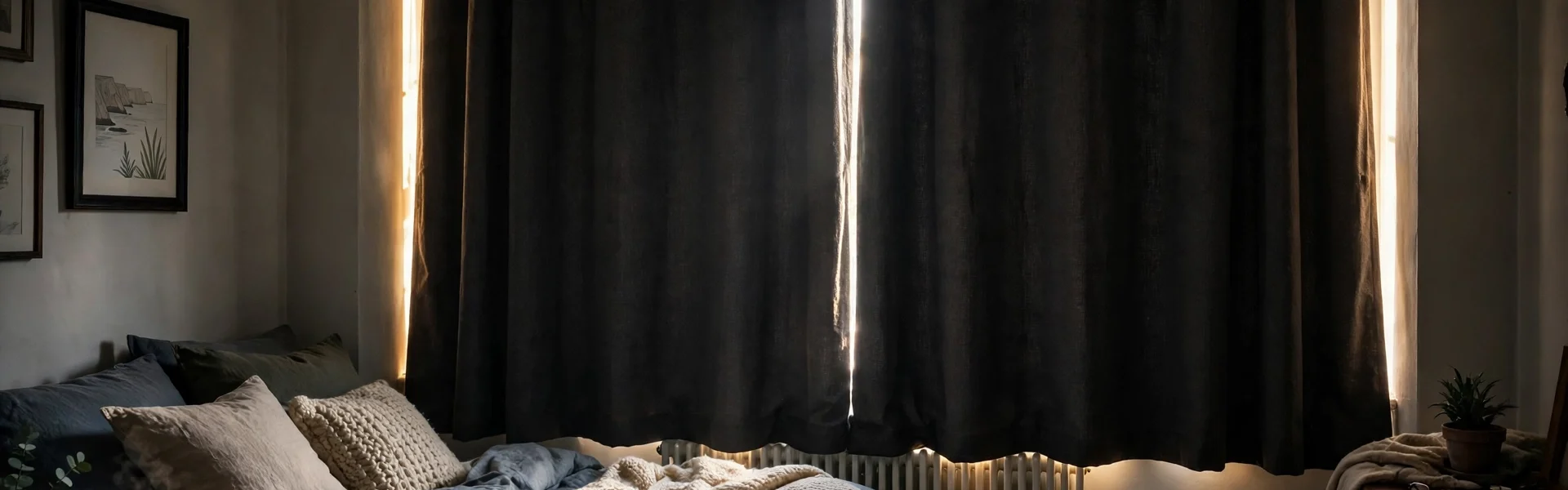
Best Fabric for Blackout Curtains: A UK Guide to Triple-Weave, Coated and Lined Curtains

The best fabric for blackout curtains is a 240 GSM or heavier triple-weave polyester, which blocks around 97 percent of light without any coating, washes well and has no smell. For total darkness choose a 3-pass coated fabric or a blackout lining behind your face fabric, and hang the panels wide and full length so no light leaks around the edges.
What makes a fabric a true blackout fabric?
Three things decide whether a curtain fabric is a true blackout fabric: construction, weight and colour. Construction decides how light is stopped: a triple weave blocks light inside the yarns, a coating blocks it with foam layers on the back, and a lining adds a separate blackout layer behind the face fabric. Weight, measured in GSM (grams per square metre), decides how dense the fabric is: heavier fabrics block more light and insulate better, while light fabrics rely on a coating that can crack after washing. Colour decides the last few percent: a dark or black fabric absorbs more light than a white or pastel one in the same construction, so a white triple weave blocks less than a dark triple weave. The fabric is only half the story, though. Even a 100 percent blackout fabric lets light in around the edges if the panels are too narrow or too short, so the hang matters as much as the cloth. For more on fabric types generally, see our types of fabric guide.
Which blackout fabric construction blocks the most light?
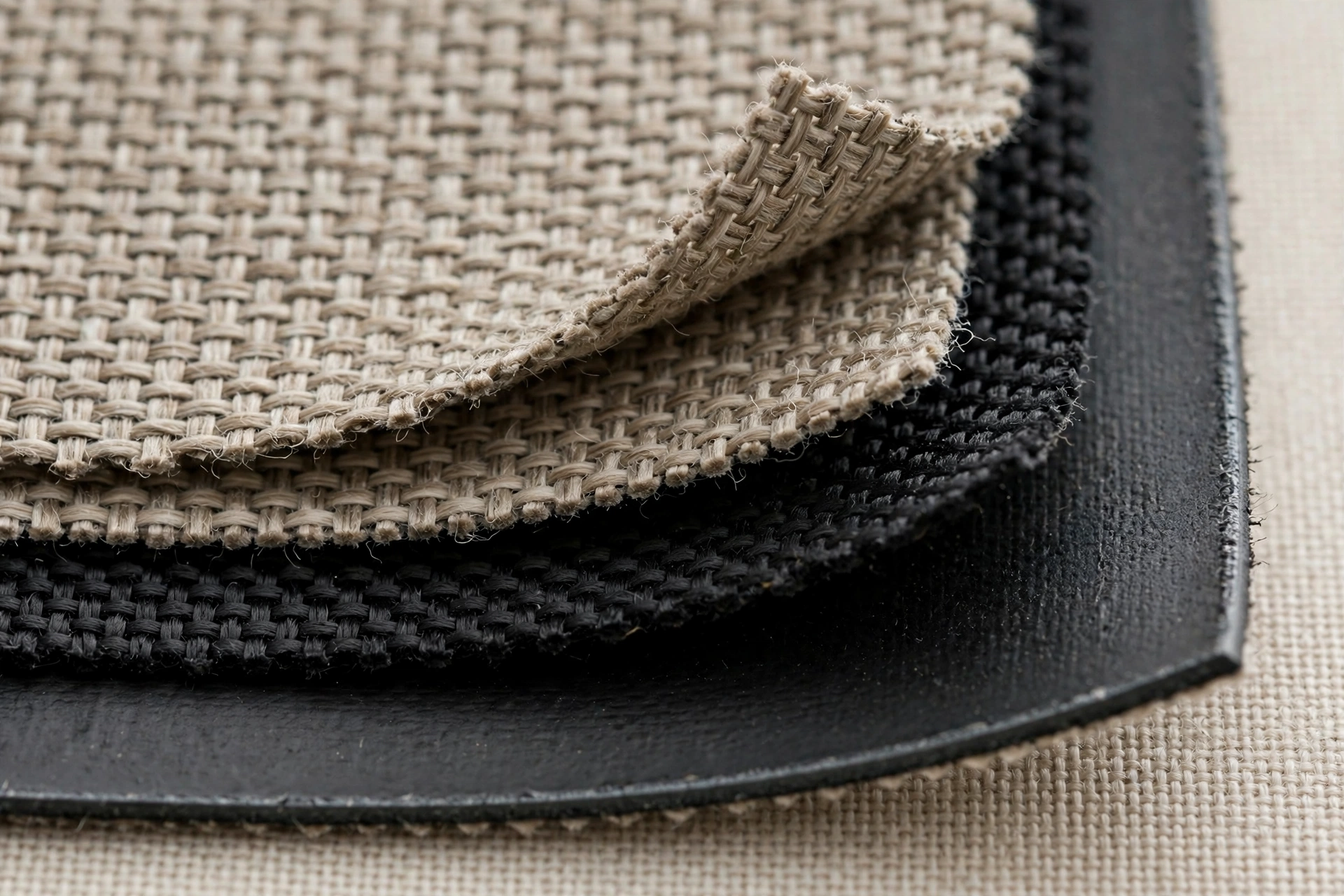
A manufacturer light-box test gives a clear ranking. Dimout fabric, a dense weave with dark weft yarns and no coating, stops about 85 percent of light. A 1-pass coated fabric, with one white acrylic foam layer on the back, stops about 92 percent. Triple weave, three layers of yarn with a black yarn in the middle, stops about 97 percent. A 2-pass coated fabric, white foam plus a black foam layer, stops about 99 percent. A 3-pass coated fabric, white foam, black layer, white foam, stops 100 percent, as does a laminated blackout and a sewn-in blackout lining. These are typical values in dark and mid shades; white and pastel triple weave blocks less, so colour is part of the choice. The table below compares every construction side by side.
| Construction | Light blocked | GSM | Washing | Best for |
|---|---|---|---|---|
| Dimout | About 85 percent | 180-260 | Machine wash 40C | Living rooms, offices, cafes |
| 1-pass coated | About 92 percent | 200-280 | Gentle wash 30C | Budget room darkening |
| Triple weave | About 97 percent | 250-350 | Machine wash 40C | Bedrooms, nurseries |
| 2-pass coated | About 99 percent | 230-300 | Gentle wash 30C | Bedrooms, nurseries |
| 3-pass coated | 100 percent | 260-330 | Gentle wash 30C | Hotels, media rooms, night shifts |
| Laminated | 100 percent | 300-420 | Dry clean | Velvet or linen-look faces |
| Blackout lining | 100 percent | 180-260 | Follow the face fabric | Behind any face fabric |
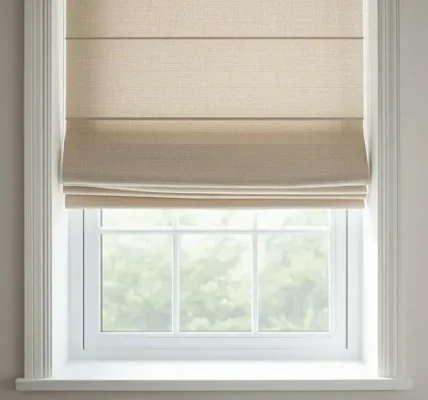
The percentages are typical values from a manufacturer light-box test in dark and mid shades. A separate blackout lining is the most flexible option of all: you keep whatever face fabric you like, from linen-look to velvet, and the lining does the blocking. It also protects the face fabric from sun damage, which is why workrooms use it for made-to-measure curtains. Our Roman blinds guide covers the same constructions in blind form, where a lining is often the simplest way to get full blackout.
What GSM should blackout curtains be?
GSM, grams per square metre, is the core number to check before you buy. Entry level liners sit around 180 GSM and rely on a coated back layer that can crack after repeated washing. A genuine triple-weave blackout starts at 240 GSM, which is the floor to aim for. The sweet spot for most UK bedrooms is 250 to 300 GSM: heavy enough to block light, insulate and dampen sound, but still draping well. Above 300 GSM the fabric gets very heavy, which suits media rooms, street-facing bedrooms and velvet, but needs a strong rod and good fixings. The table below turns GSM into a buying rule.
| GSM band | What it means | Best for |
|---|---|---|
| Under 200 | Light dimout, relies on a coating | Sheer over-panel, living rooms |
| 200-240 | Good room darkening, entry level | Guest rooms, budget blackout |
| 240-300 | The sweet spot, full blackout with good drape | Bedrooms, nurseries |
| Over 300 | Very heavy, best thermal and sound damping | Media rooms, street-facing bedrooms, velvet |
Do not judge by GSM alone. A 230 GSM triple weave can outperform a 280 GSM coated fabric after a year of washing, because the coating degrades while the weave does not. Always check the construction next to the GSM, and be wary of listings that quote a high GSM without saying how the blackout is achieved. If the listing says only "blackout coating" with no GSM at all, treat it as a budget coated fabric and expect 1-pass performance.
Is triple-weave better than coated blackout fabric?
For most homes, yes. Triple weave stops light with yarn, not with a surface treatment: two outer woven polyester layers sandwich a black inner yarn layer, so the light is blocked at fibre level. That gives it three advantages over coated fabric. First, it has no chemical smell, which coated fabrics can have when new. Second, it washes well: machine wash at 40C without the coating cracking or peeling. Third, it drapes like a normal curtain, soft and heavy, rather than feeling stiff. Coated fabric has its own strengths: a 3-pass coated fabric reaches 100 percent light block, which triple weave does not quite match, and it holds crisp pleats, which suits hotels and formal rooms. A 2-pass coated fabric reaches about 99 percent and is a good middle ground. The honest summary is that triple weave is the best all-rounder for bedrooms and nurseries, while 3-pass coated is the best choice when total darkness is the priority and you accept a firmer hand and gentler washing. A laminated blackout, any face fabric bonded to a blackout film or 3-pass back, gives you the face you want with full blackout, but it is the heaviest option at 300 to 420 GSM and usually needs dry cleaning.
Do blackout curtains keep heat in and noise out?
Yes, and the effect grows with weight. A heavy blackout curtain adds a layer of insulation over the window, which is the coldest surface in most rooms. It slows heat loss in winter and blocks solar gain in summer, and thermal-coated versions do more again. Do not expect miracles: curtains do not replace insulation or double glazing, and the benefit depends on the panels covering the whole window with no gaps at the top or sides. Noise is similar. Heavier fabrics dampen sound more effectively, and triple-weave fabric in the 250 to 300 GSM range adds mass that softens mid to high frequency street noise such as traffic and voices. A lined curtain does better still, because the extra layer adds mass and the air gap between face and lining helps. Velvet is the strongest face fabric here: a triple-weave velvet at around 280 to 350 GSM gives blackout performance without a separate lining, blocks roughly 85 to 99 percent of light, and absorbs sound better than flat weaves. If noise is your main problem, choose the heaviest construction you can hang well, and seal the edges as far as you can.
How should blackout curtains be hung and measured?
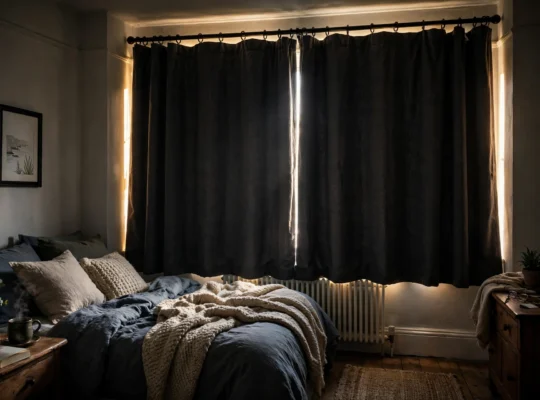
The hang decides whether the fabric can do its job. Light leaks around the edges, not through the cloth, so measure for coverage, not just for the window. Order the rod wider than the frame so the panels overlap it by 10 to 15 cm (4 to 6 inches) on each side, and hang the panels full length so they graze the floor. A rod fitted too close to the frame leaves a gap at the top where morning light pours in, and panels that stop at the sill leak light from below. Fullness matters too: order fabric at 2 to 2.5 times the width of the rod so the folds are deep enough to close fully. The room picker below gives a starting point for each room.
| Room | Recommended construction | GSM | Hang notes |
|---|---|---|---|
| Main bedroom | Triple weave or 3-pass coated | 240-300 | Overlap frame 10-15 cm each side, graze the floor |
| Nursery or child's room | Triple weave, cordless | 240-300 | Cordless only, keep the cot away from the window |
| Media room | 3-pass coated or laminated | 260-330 | Full length, seal the edges, dark colour |
| Living room | Dimout or lined linen | 180-260 | Lighter fabric, 2 times fullness, standard length |
| Night-shift bedroom | 3-pass coated | 260-330 | Total darkness matters most, add a pelmet or side channels |
If light still leaks at the sides after hanging, the fix is usually a longer rod, a second tension rod behind the liner, or side channels that hold the panel against the wall. A pelmet above the rod closes the top gap. These are geometry fixes, not fabric fixes, and they cost far less than replacing the curtains. For made-to-measure curtains, give the maker the exact drop and the rod position, and allow for the lining: a lined curtain hangs heavier and needs a stronger rod and fixings than the same size in unlined fabric. Our home textile decor guide has more on choosing curtain fabrics for each room.
Are blackout curtains safe for children and pets?
Curtains themselves have no cords, so the curtain fabric is not the risk. The risk comes from any blind paired with them, and from cords on tie-backs or pull cords on tracks. Under BS EN 13120, the British and European standard for internal blinds, blinds sold in the UK since February 2014 must be cordless or fitted with a safety device such as a cleat, a tensioner or a breakaway connector. The bottom of any looped cord or chain must hang at least 1.5 m from the floor, and breakaway connectors are designed to split if a load above 6 kg is applied to the loop. In a nursery or child's bedroom, the safest choice is cordless throughout: a cordless blind or a curtain on a wand or motorised track, with no loop anywhere a child can reach. Keep cots, beds and highchairs away from any window with a corded blind, and wrap spare cord in a figure of eight on a cleat after use. Older blinds bought before 2014 may not meet the standard, so check them and retrofit a safety device or replace them. Pets face the same risk from dangling cords, so the same rules apply in a home with cats or dogs.
How do you wash and care for blackout curtains?
Care depends on the construction, so always check the care label first. Triple weave is the easiest: machine wash at 40C, then hang to dry. It holds up after repeated washing because there is no coating to crack. Coated fabrics need a gentle wash at 30C, and the coating can crack or peel over time, especially if the curtains are washed hot or tumble dried. Never tumble dry a coated blackout curtain. Laminated blackout should be dry cleaned, since heat and water can damage the bond between the face and the film. A blackout lining follows the care of the face fabric it is sewn to, so check both labels. Between washes, vacuum the curtains with an upholstery attachment to remove dust, and spot clean marks with a damp cloth rather than washing the whole panel. Sunlight fades face fabrics over time, so a lining also protects your curtains: it takes the sun damage instead of the face cloth. For more on keeping fabrics in good condition, see our fabric care guide.
Frequently Asked Questions
Do blackout curtains block 100 percent of light? Only 3-pass coated, laminated and lined constructions block 100 percent through the fabric in light-box tests. Triple weave blocks around 97 percent. Total darkness also needs the hang: panels wider than the frame, full length, and no gaps at the top or sides.
What is the best GSM for blackout curtains? 240 GSM is the floor for a genuine triple-weave blackout, and 250 to 300 GSM is the sweet spot for light block, thermal insulation and noise damping. Below 200 GSM the fabric relies on a coating that can crack after washing.
Can you wash blackout curtains? Triple weave, yes: machine wash at 40C. Coated fabrics need a gentle 30C wash, and the coating can crack over time. Laminated blackout should be dry cleaned. Always check the care label first.
Do blackout curtains keep a room warm? Yes, heavier blackout fabrics add a layer of insulation, and thermal-coated versions do more. They slow heat loss through the window in winter and block solar gain in summer, but they do not replace insulation or double glazing.
Are blackout curtains safe in a child's bedroom? Curtains themselves have no cords, but any blind paired with them must meet BS EN 13120. Since February 2014, blinds sold in the UK must be cordless or fitted with a safety device, with loops kept at least 1.5 m from the floor. Choose cordless and keep the cot away from the window.
Related Reading: Roman Blinds Guide | Home Textile Decor Fabric Guide | Types of Fabric Guide 2026 | Fabric Care and Clothing Storage Guide
Written by the Textile Conservancy team. We write practical, UK focused fabric guides based on published standards and labelling rules, and we check our facts against the sources named in each guide.