How to Remove Oil Stains from Fabric: A Complete UK Guide by Fabric Type

Blot the oil, never rub it. Cover it with baking soda, cornstarch or talc for 15 to 30 minutes, brush it off, then work washing-up liquid into the dry fabric for 10 minutes. Rinse from the back, wash at the warmest temperature the care label allows, and air-dry. Check before tumble drying, because dryer heat sets oil permanently.
Why does oil need a different method from other stains?
Oil is not like a water-based spill. Cooking oil is a triglyceride, a glycerol molecule bonded to three fatty acid chains, and it is hydrophobic, which means water alone cannot dissolve it. Pouring water on a fresh oil stain does nothing useful, and it can even push the oil deeper into the weave. What removes oil is a surfactant, a substance that gets along with both water and oil and forms a bridge between the two, so the water can then carry the oil away. Washing-up liquid is made for exactly this job, and it carries a higher concentration of surfactants than ordinary laundry detergent, which is why it works better on oil than detergent alone.
Fresh oil is also easy to miss. It is often invisible while the fabric is wet and only shows as a dark patch once the cloth dries. The Drycleaning and Laundry Institute warns that oils can dry without leaving a visible mark, then turn yellow or brown later as the oil oxidises. That is why a shirt that looked clean after a wash can show a stain days later, and why the check before drying matters so much.
Time works against you with oil. Once it sits, unsaturated cooking oils oxidise and polymerise, bonding more firmly to the fibres. A stain treated in the first minutes is a surface problem. The same stain left for hours, or put through a hot dryer, becomes a chemical bond inside the fibre. The method in this guide follows that logic in order: take the oil out first, then break down what is left, then wash, then check before any heat.
One more point shapes the whole guide. Most generic stain advice is written for cotton, because cotton tolerates almost everything. The same advice can damage silk, wool, viscose or acetate, which is why this guide gives the method by fibre type. The first step is the same for every fabric. After that, the fibre decides the route, and our fabric care guide covers the same first-aid logic for other stains too.
What do you need before you start?
Read the care label first. It tells you whether the garment is machine washable, hand washable or dry-clean-only, and it sets the maximum wash temperature. The temperature dots on the label are the ceiling for the wash, not a suggestion. On a lined garment, read the lining line too, because the lining may be a different fibre with different limits. If the label says dry-clean-only, do not attempt the stain at home.
You need only a small kit, and most of it is already in the kitchen. A white paper towel or a clean white cloth for blotting. Baking soda, cornstarch or talc as the absorbent powder. A clear washing-up liquid, not a coloured one, because coloured soap can transfer colour to pale fabric. A soft toothbrush for sturdy fabrics only. A white towel or a piece of plain cardboard to place behind the stain, so the oil does not spread to the layer below. Your normal laundry detergent for the wash, and oxygen bleach as an optional extra for white or colourfast cotton.
Test anything unfamiliar on a hidden seam first, especially on silk, wool or printed fabric. Two products never belong in this job. Dishwasher detergent is strongly alkaline and is ruled out by Cornell Cooperative Extension guidance. Fabric softener has no place on a stained load either, because it coats the fibres and can trap what you are trying to remove.
How do you remove a fresh oil stain step by step?
Step 1: blot, do not rub. Place a dry paper towel or a clean white cloth over the stain and press straight down, then lift and replace it with a dry section. Repeat until no more oil transfers. Rubbing spreads the oil sideways and pushes it deeper into the weave, and on cotton it can drive the oil from the surface into the core of the yarn. For solid fat such as butter or bacon grease, lift it off first with a dull knife or a spoon edge, working from the outside in.
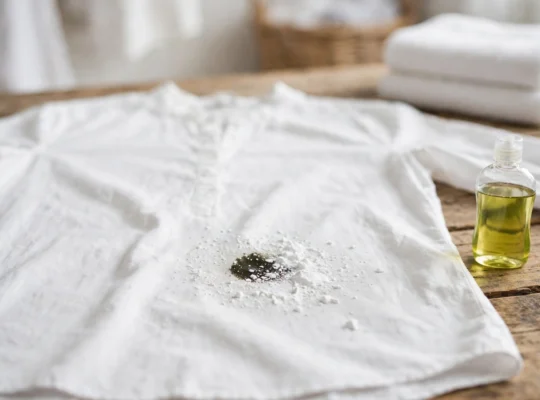
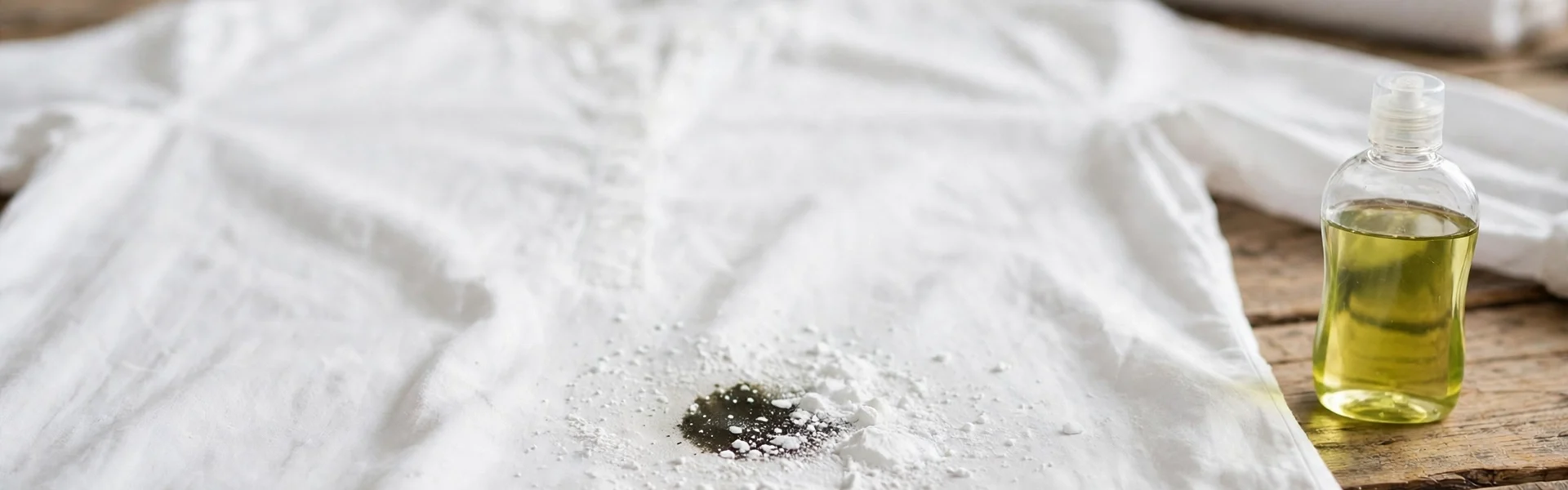
Step 2: cover the mark generously with baking soda, cornstarch or talc. The powder absorbs oil by capillary action, wicking the liquid out of the yarn before it can spread. Leave it for 15 to 30 minutes, longer for thick fabrics such as denim. The powder will clump slightly and darken as it absorbs the oil. Brush it off gently, then repeat with fresh powder until the powder stays white instead of darkening or clumping. This step alone removes a large part of the oil before any liquid treatment begins.
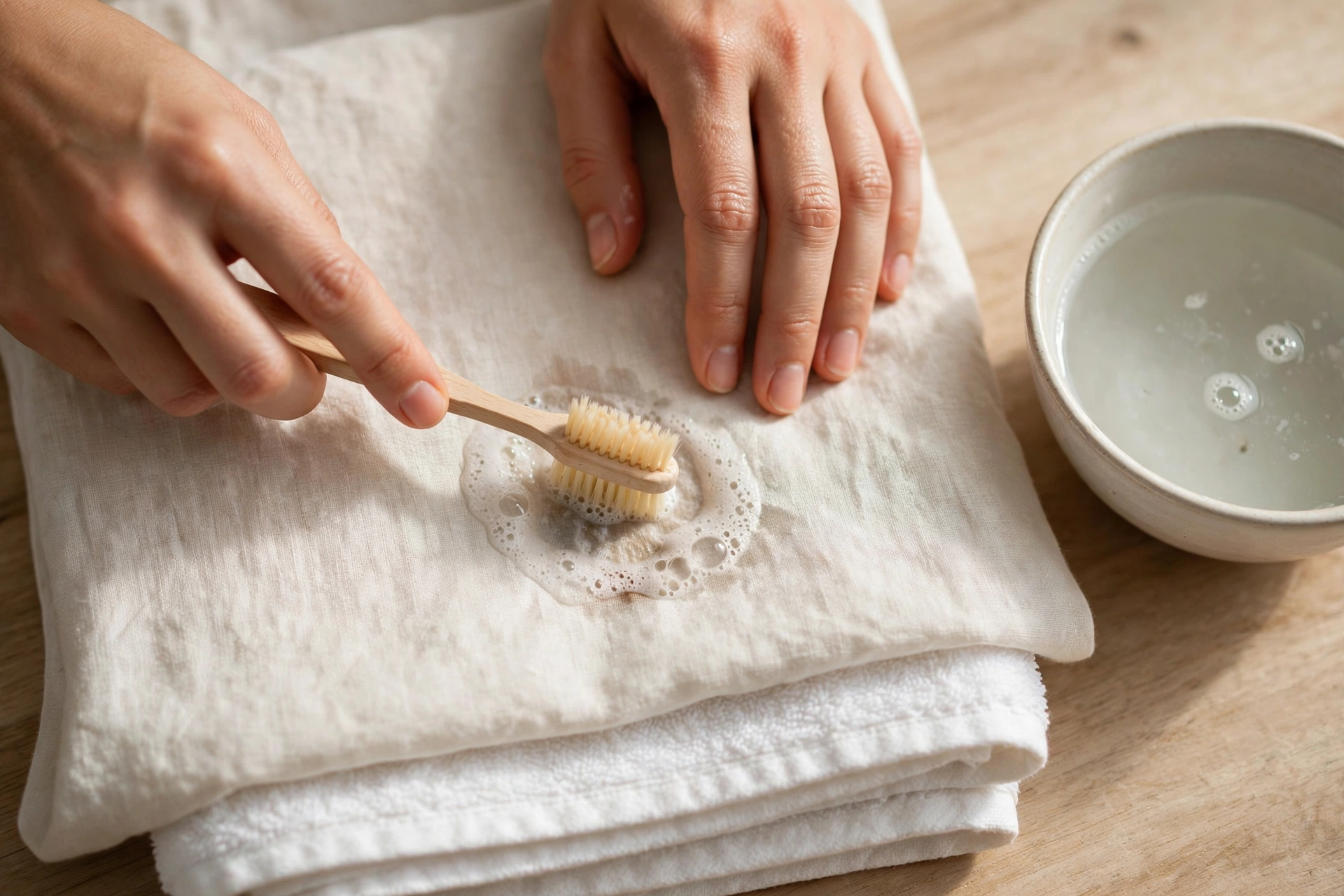
Step 3: work undiluted washing-up liquid into the dry fabric. Put a few drops directly on the stain and work it in gently with your fingers or a soft toothbrush, in small circular motions. Leave it for 10 minutes, or 15 minutes or more on polyester and its blends. Working it into dry fabric matters, because the surfactant reaches the oil before water dilutes it. Add only a very small amount of warm water if you need lather, and keep working it in.
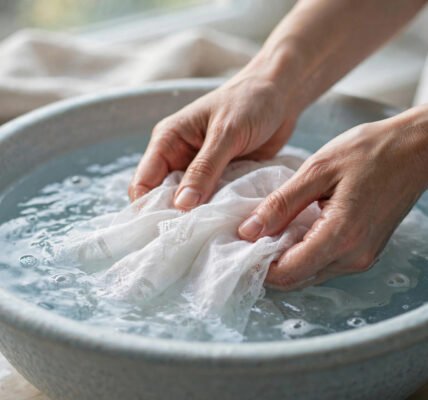
Step 4: rinse from the back. Hold the stained area under warm running water from the back of the fabric, so the water pushes the oil out through the front instead of driving it deeper. Unlike protein stains such as blood or egg, warm water is fine for oil, because there is no risk of heat setting the oil at rinse temperatures. Check that the soap is fully rinsed out, because soap residue left in fabric causes stiffness.
Step 5: wash normally, then air-dry and check. Machine wash with your usual detergent at the warmest temperature the care label allows. Before the garment goes anywhere near a dryer or an iron, inspect the stain area while the fabric is still damp. If a shadow remains, repeat the treatment. A fresh stain usually comes out in one wash, but the damp check is what decides whether you have won or whether you are about to bake the stain in.
How do you remove a dried or set-in oil stain?
A dried oil stain is a different problem from a fresh one. Once oil has oxidised and polymerised, it bonds more firmly to the fibres, and heat from a tumble dryer bakes it in place, driving the oil deeper and making it far less soluble. The stain is not necessarily permanent, but it needs more time, more rounds, and a different order of treatment.
Start by scraping off any hardened residue with a butter knife or a spoon edge, working from the outside in and without rubbing. Then apply undiluted washing-up liquid directly to the dry stain and work it in with a soft toothbrush, in small circles, and leave it for 15 to 20 minutes. For a stubborn mark, mix baking soda with a small amount of washing-up liquid to form a paste, apply it to the stain, and leave it for 30 minutes. On washable cotton and polyester, a biological enzyme pre-treatment left for up to 30 minutes can also help, because lipase enzymes break fat molecules down. Repeat the cycle as needed, and rinse from the back with warm water between rounds.
What about the solvent trick that some guides recommend, a small amount of WD-40, lighter fluid or dry-cleaning solvent to re-dissolve the set oil? It can work, but cleaning experts warn against it as a routine home treatment, because solvents can leave residue, affect dyes, damage fibres and introduce a flammability risk. Leave solvents to a professional dry cleaner, and never use them on delicate fabrics.
The one rule that matters most for set-in stains is the dryer rule. Never put the garment in the dryer until the stain is completely gone. Even one dryer cycle at high heat can make a faint remaining mark permanent. Air-dry after every wash, inspect the stain area, and repeat the treatment if any shadow is left. Patience is the method here. A set stain that survives two or three careful rounds may still come out, while a single rushed dryer cycle ends the chance.
How does the method change by fabric type?
The fibre decides the route. If you are unsure which fibre your garment is made from, our types of fabric guide shows how to tell the common fibres apart. Cotton, linen, polyester and nylon take washing-up liquid and a hot wash, with polyester needing a longer pretreatment because it holds oil on its surface. Wool, silk and acetate take powder and a gentle detergent instead of hot water. The table below gives the method for each fibre group, and the notes below it explain the hard limits.
| Fibre | Absorbent powder | Pretreat | Wash | Never do |
|---|---|---|---|---|
| Cotton and linen | Yes, 15 to 30 minutes | Washing-up liquid, 10 minutes or more | Warmest temperature the label allows | Nothing special, a soft brush is fine |
| Polyester and nylon | Yes | Washing-up liquid, 15 minutes or more, repeat if needed | Warmest temperature the label allows | Do not rush the pretreat, polyester holds oil on its surface |
| Wool and cashmere | Yes, first | Neutral wool detergent, cool water | Cool wash, blot only | No enzyme pre-treatment, no chlorine bleach, no hot water |
| Silk | Yes, cornstarch 30 minutes | Small drop of diluted washing-up liquid, blot only | Hand wash cold | No hot water, no tumble drying, no enzyme treatment |
| Viscose and acetate | Yes | Mild detergent, test first | Cool wash | No acetone on acetate, it dissolves the fibre; viscose is much weaker when wet, so no vigorous rubbing |
Polyester deserves a warning of its own. Iowa State University Extension calls polyester an oil-loving fibre, and oil stains on it darken over time, which is why the pretreatment needs 15 minutes or more and sometimes a second round. Cotton is the opposite. It wicks oil in quickly, so you must act the same day, but it also gives the oil up readily, and a Procter and Gamble soil-release patent describes oily soil as much more easily removed from cotton than from polyester.
Wool and silk are protein fibres, and that fact sets their limits. Enzyme pre-treaters are designed to break down protein, and they cannot tell the difference between a protein stain and a wool jumper or a silk blouse, so they must never be used on either fibre. Chlorine bleach destroys wool, silk and elastane rather than whitening them, and oxygen bleach yellows protein fibres. Acetone dissolves acetate, a lining fibre nobody thinks to check, so nail varnish remover makes a hole rather than a clean patch. Viscose loses about half its strength the moment it is wet, so the universal advice to work at a stain tears the cloth. On silk, treat the whole panel rather than one spot where you can, because water can leave a visible ring on the fabric. Our silk fabric guide explains silk care in full, including how to wash it without shrinking.
Which home remedies actually work on oil stains?
Not every remedy in the cupboard helps with oil, and some of the most repeated ones do nothing at all. The table below judges each common remedy on what it actually does to oil, and where it can cause harm.
| Remedy | What it does to oil | Best for | Watch out |
|---|---|---|---|
| Washing-up liquid | Surfactants emulsify oil so water can rinse it away | All washable fabrics, the first choice | Use clear liquid on pale fabric, rinse it out fully |
| Baking soda, cornstarch, talc | Absorbent powder wicks liquid oil out of the yarn | Fresh stains, the first step on any fabric | Brush off gently, no scrubbing on wool or silk |
| Biological enzyme pre-treatment | Lipase enzymes break fat molecules down | Set-in stains on cotton and polyester | Never on wool or silk, enzymes digest protein fibres |
| Oxygen bleach soak | Lifts the faint shadow left after the oil is gone | White and colourfast cotton after washing | Not a first step, check the label, never on wool or silk |
| White vinegar | Nothing on oil, it is acidic water and cannot dissolve nonpolar oil | Not an oil remover | Do not rely on it for the stain itself |
| WD-40, lighter fluid, solvents | Re-dissolve set oil | Last resort only | Residue, dye damage and flammability risk, leave to a professional |
Vinegar is the remedy most often suggested for oil, and it is the one that does least. Vinegar is acidic water. Oil is nonpolar. An acidic water-based liquid cannot dissolve a nonpolar oil, and it can weaken protein fibres such as wool and silk. It may help rinse soap residue away, but it will not lift the stain itself. The same logic applies to lemon juice. If a guide tells you to pour vinegar on an oil stain and wait, it is treating the wrong chemistry.
Washing-up liquid is the only household product in the list designed for exactly this job. It is a degreaser by design, and its surfactants surround oil molecules and lift them off the surface. Laundry detergent also contains surfactants, but at a lower concentration than washing-up liquid, which is why detergent alone rarely removes an oil stain fully, and why a wash without pretreatment so often leaves the mark behind.
How much powder and soap should you use?
Scale the treatment to the size of the mark. More soap does not clean faster. More than a teaspoon of washing-up liquid per spot only makes extra suds that are hard to rinse out. The table below sizes the doses by stain width, based on a published test of a real olive-oil spill.
| Stain size | Powder | Washing-up liquid | Oxygen-bleach soak |
|---|---|---|---|
| A drip, about 2 cm | 1 tablespoon, 15 minutes | Half a teaspoon, 10 minutes | 1 tablespoon in 2 litres, 1 hour |
| A splash, about 5 cm | 2 tablespoons, 20 minutes | 1 teaspoon, 10 minutes | 1 tablespoon in 2 litres, 2 hours |
| A spill, about 10 cm | 4 tablespoons, 30 minutes | 1 teaspoon, twice | 2 and a half tablespoons in 5 litres, 2 hours |
| A soaked patch, larger still | Cover it thickly, 1 hour | 1 teaspoon, twice | Soak the whole garment, 2 hours |
The test behind the table is worth reading in full, because it shows that removing oil is a rounds job, not a single wash. About 2 teaspoons (10 ml) of olive oil splashed across the chest of a white cotton T-shirt, a mark about 5 cm across. Round one: 2 tablespoons of cornflour over the mark, left 20 minutes, then brushed off outside, and the powder came away yellowed. Round two: 1 teaspoon (5 ml) of clear washing-up liquid worked in from the back, left 10 minutes, then rinsed warm. Round three: a 40C wash for 45 minutes. Held up damp, a faint grey shadow was still there. Round four: a soak of 1 tablespoon of oxygen bleach in 2 litres of warm water for 2 hours, then a second 40C wash. Total time was 4 hours 10 minutes from splash to clean shirt, with about 14 minutes of hands-on work and the rest waiting. The damp check after round three is what saved the shirt. If it had gone into the dryer at that point, the shadow would have stayed.
What mistakes set an oil stain permanently?
Rubbing the fresh stain is the first mistake. It spreads the oil sideways and pushes it deeper into the weave, and on brushed fabrics it drives the oil past the yarn twist into the core of the spun fibres. Blotting is the only safe first move.
Tumble drying before checking is the mistake that ends the job. Dryer heat bonds any remaining oil to the fibre, and a faint stain that looked as if it might be gone becomes permanent after even one dryer cycle at high heat. The same applies to ironing over the stain. Always air-dry and inspect while the fabric is damp, and only use heat once the mark is fully gone.
Washing without pretreating is the quietest mistake. A normal wash cycle, without direct treatment first, rarely removes oil fully, because the detergent is diluted through the whole load and the oil is never broken down at the stain itself. The stain then goes into the dryer half-treated, which is how a fixable mark becomes permanent.
The product mistakes are just as costly. Dishwasher detergent is strongly alkaline and damages fabric. Coloured washing-up liquid can transfer colour to pale fabric. Chlorine bleach on wool, silk or elastane destroys the fibre instead of whitening it. Enzyme pre-treaters on wool or silk digest the fibre along with the stain. And vinegar, for all its reputation, cannot dissolve oil, so a vinegar-first treatment wastes the window in which the stain was still easy to lift.
When should you take it to a dry cleaner?
Take it to a professional when the care label says dry-clean-only. Do not attempt the stain at home, because the products that remove oil can ruin the fabric, and a dry cleaner has the solvents and equipment to remove it safely. The same applies to valuable silk or wool, to a garment with an acetate lining, and to any mixed-fibre garment where you are unsure what the fibres will tolerate.
Go to a cleaner if you have already treated the stain twice without success, or if the stain is motor oil or engine grease, which carries soot and additives as well as oil and behaves differently from cooking oil. Keep heavily contaminated workwear separate from ordinary laundry, and tell the cleaner what the stain is and what you have already tried. Point the stain out. Oils can dry without leaving a visible mark and yellow later, so a cleaner who knows the stain is oil-based can treat it before it shows.
A dry cleaner is also the right call when the stain is old and you cannot tell how many times the garment has already been through the dryer. A professional can still lift some heat-set stains with solvents that are not safe to use at home, and they can tell you honestly when a mark has gone too far to save.
Frequently Asked Questions
Can you get an oil stain out after it has been washed and dried? Yes, often. Treat the dry fabric with undiluted washing-up liquid, work it in with a soft toothbrush, and leave it for 15 to 20 minutes. Add a baking soda paste for 30 minutes if the mark is stubborn, then wash again and air-dry. A set stain usually needs two or three rounds, and the dryer must stay off until the mark is fully gone.
Does vinegar remove oil stains? No. Vinegar is acidic water, and oil is nonpolar, so vinegar cannot dissolve it. It may help rinse soap residue away, but it will not lift the stain. Washing-up liquid is the household remover that actually works on oil.
Will washing-up liquid damage clothes? No, when it is a clear, mild liquid used in small amounts and rinsed out fully. Avoid coloured washing-up liquid on pale fabric, and do not use it on dry-clean-only garments. Dishwasher detergent is different and too alkaline for clothes.
How long should baking soda stay on an oil stain? 15 to 30 minutes for most fabrics, longer for thick fabrics such as denim. Brush it off gently, and repeat with fresh powder until the powder stays white instead of darkening or clumping.
Can you use baking soda on silk or wool? Yes, as a dry powder to absorb the oil. Sprinkle it on, leave it, and brush it off gently with no scrubbing. Then use only a neutral detergent and cool water, or take the garment to a dry cleaner. Never use enzyme pre-treatments or chlorine bleach on wool or silk.