TENCEL Lyocell Fabric Guide: A Complete UK Guide to Feel, Care and Buying

TENCEL lyocell is a soft, cool fabric made from FSC-certified eucalyptus wood pulp in a closed-loop process that recovers over 99 percent of its solvent. TENCEL is Lenzing's brand name for its lyocell, not a different fibre. It drapes fluidly, wicks moisture well, and suits dresses, shirts and bedding, but it needs cool, gentle washing.
What is TENCEL lyocell fabric?
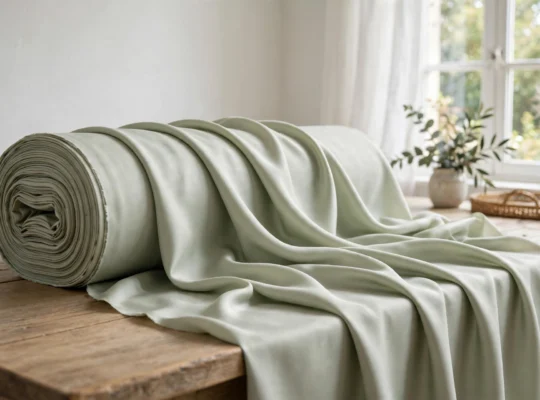
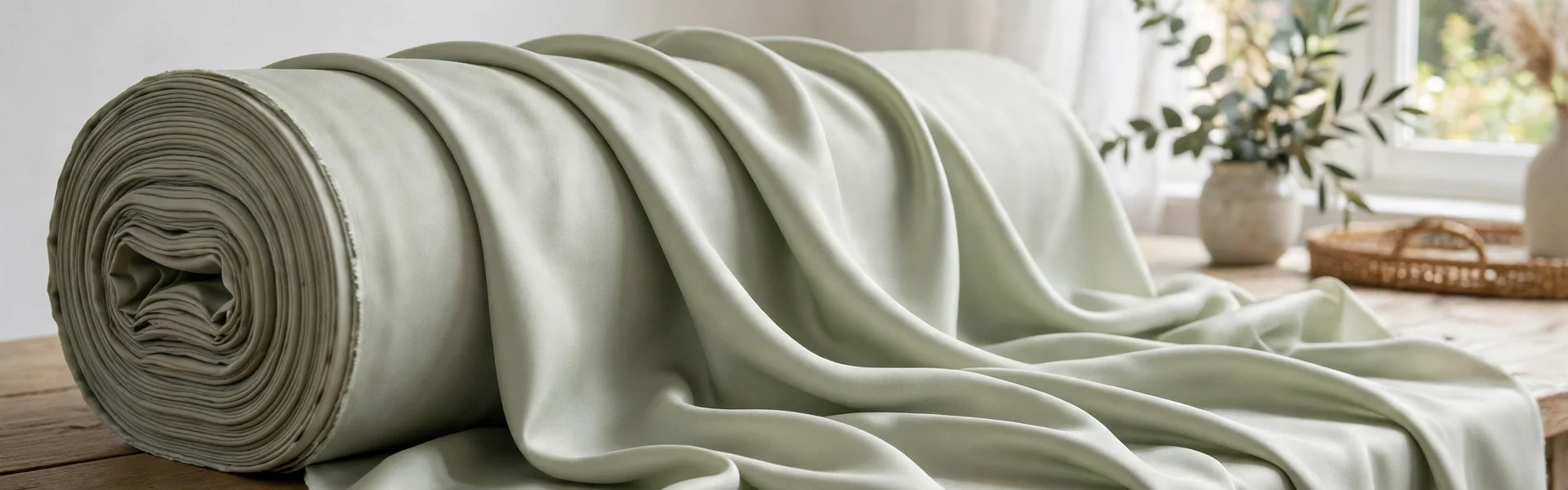
TENCEL lyocell is a regenerated cellulose fabric, which means it starts as a natural material, wood, and is dissolved and reformed into fibre. The wood is usually eucalyptus, beech or spruce, grown in certified forests. The fibre feels closer to silk than to cotton, with a fluid drape and a slight sheen, and it is cool and smooth against the skin. In fabric form it is soft, drapey, moisture-wicking and biodegradable.
The name causes confusion, so it is worth settling it first. Lyocell is the generic fibre name, defined by the FTC and ISO 2076, for a regenerated cellulose fibre made by dissolving wood pulp in a solvent and spinning it into fibre. TENCEL is a brand name owned by the Austrian company Lenzing AG, covering its own lyocell and modal fibres made under its sustainability standards. So all TENCEL lyocell is lyocell, but not all lyocell is TENCEL. Only fibres produced by Lenzing can be labelled TENCEL; other lyocell must use the generic name unless authorised. In everyday use, "TENCEL fabric" usually means lyocell or modal textiles sold under that brand, and the label should say which one it is. For a wider view of fabric types, see our types of fabric guide.
How is TENCEL lyocell made?
The making of TENCEL lyocell is what sets it apart from older regenerated fibres such as viscose. The process is a closed loop, and it runs in six steps. First, certified wood chips, mostly eucalyptus, beech and spruce, are pulped into cellulose sheets. Second, the sheets are dissolved in N-methylmorpholine N-oxide, known as NMMO, a non-toxic organic solvent. Third, the resulting solution, called dope, is filtered and pumped through spinnerets, fine nozzles, into a water bath. Fourth, the cellulose solidifies into continuous filaments as the solvent is diluted by the water. Fifth, the fibres are washed, dried and crimped for textile processing. Sixth, and most important, the NMMO is recovered, purified and fed back into the start of the process.
Lenzing reports that more than 99.8 percent of the solvent is recovered and reused across production cycles, a level of recovery unmatched by conventional viscose, which uses carbon disulfide, a toxic and volatile chemical recovered at rates below 50 percent. The whole journey from raw cellulose to baled fibre takes roughly two hours. The process was not Lenzing's invention: Courtaulds developed it in Britain, running a pilot plant at Coventry in 1982 and a semi-commercial line at Grimsby in 1988, then reaching full commercial production at Mobile, Alabama in 1992 under the trade name TENCEL. Lenzing acquired the Tencel business in 2004 and is now the largest producer. World lyocell output was about 0.4 million tonnes in 2024, roughly 5 percent of the 8.4 million tonnes of man-made cellulosic fibre produced that year, according to Textile Exchange.
What are the properties of TENCEL lyocell?
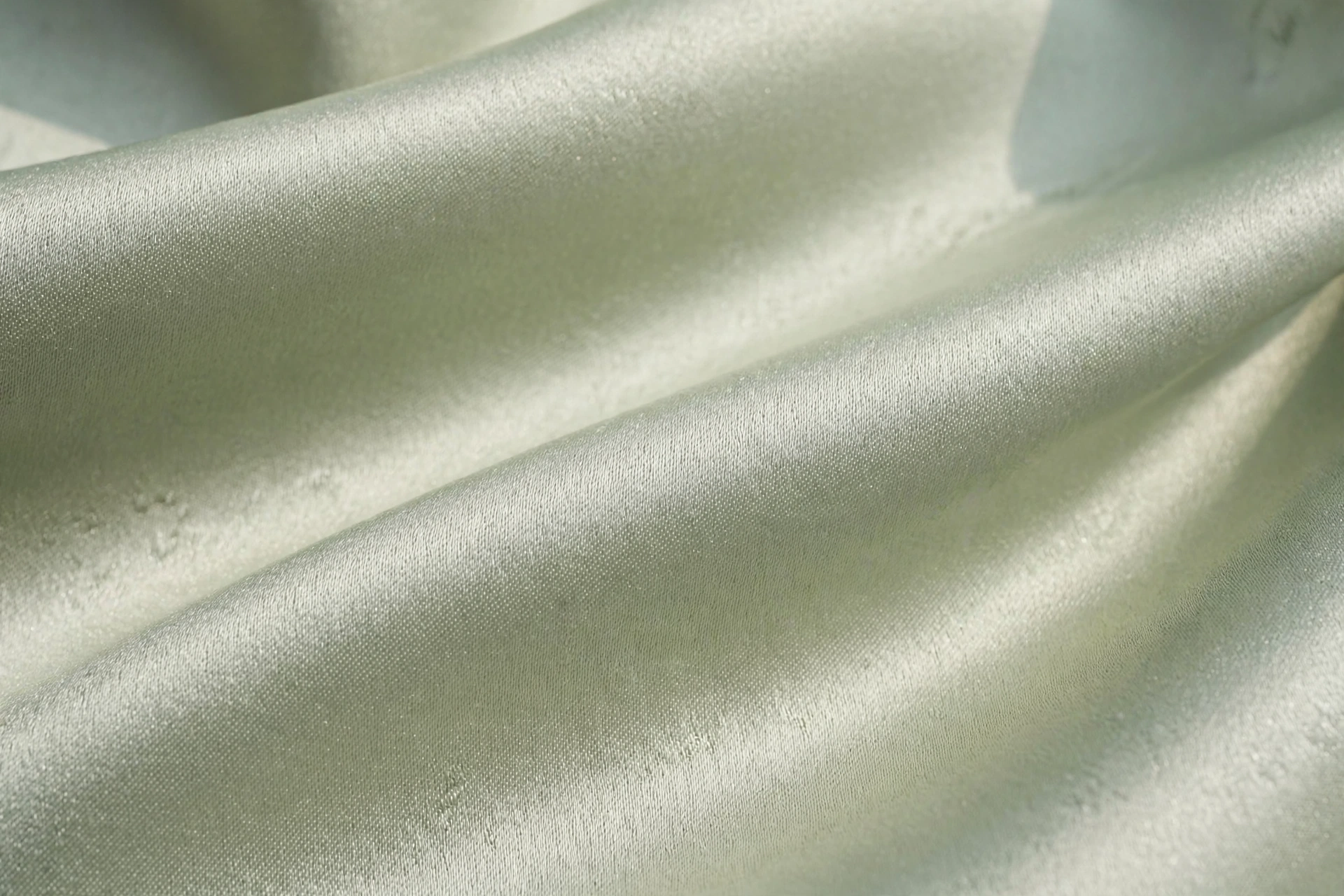
TENCEL lyocell combines the cool, fluid feel of viscose with much better wet strength, so it can be machine washed more confidently than viscose. Its dry tenacity is 40 to 42 cN per tex, against 25 to 30 for combed cotton and 34 to 36 for modal, and it keeps about 85 percent of its dry strength when wet. Cotton is unusual in that it gets stronger when wet, at about 110 percent, while modal keeps only about 60 percent. At 65 percent relative humidity, TENCEL absorbs 12 to 13 percent of its weight in moisture, about 50 percent more than cotton at 7 to 8 percent, and it releases that moisture quickly, which is why it feels cool and dry rather than clammy. The fibre has a perfectly round cross-section with a smooth surface, which creates a micro-channel effect that wicks moisture sideways rather than trapping it. The table below summarises the properties that matter in daily use.
| Property | TENCEL lyocell | What it means for you |
|---|---|---|
| Dry strength | 40-42 cN per tex, stronger than cotton | Garments hold their shape and resist tearing |
| Wet strength | Keeps about 85 percent when wet | Washes well, unlike viscose which weakens badly |
| Moisture absorption | 12-13 percent at 65 percent humidity | About 50 percent more absorbent than cotton, cool in heat |
| Moisture release | Fast, micro-channel wicking | Dries quickly, less clammy than cotton or modal |
| Breathability | High, air permeability about 650 mm per s | Comfortable for hot sleepers and warm weather |
| Softness and hand | Smooth, cool, sometimes silky | Premium feel next to skin, suits sensitive skin |
| Drape | Fluid and heavy for its weight | Soft shirts, dresses and relaxed trousers that hang well |
| Elastic recovery | Low, about 55 percent | Fabric relaxes, so it suits relaxed cuts, not fitted tailoring |
| Shrinkage | 3-6 percent over 5 washes, less when preshrunk | Wash cool and gentle to keep it stable |
| Fibrillation | Fibres can split into fine fibrils when wet and abraded | Can give a peach-skin surface, or unwanted fuzzing if uncontrolled |
Two properties need a little more explanation. The first is fibrillation. When lyocell is wet and rubbed, tiny filaments lift from the fibre surface. Controlled, this gives a soft peach-skin finish that many buyers like. Uncontrolled, from harsh washing or heavy abrasion, it shows as fuzzing or a worn look. That is why gentle washing matters: it is a fibre property, not a defect, but care decides which way it goes. The second is the low elastic recovery of about 55 percent. Unfinished TENCEL knits relax and grow slightly with wear, so the fabric suits fluid, relaxed silhouettes and is a poor choice for structured tailoring that needs to hold a sharp shape. For more on choosing fabrics for the home, see our sustainable fabric shopping guide.
What is the difference between TENCEL and generic lyocell?
The difference is not the fibre type but the maker and the guarantees behind it. Generic lyocell is any lyocell made by the NMMO solvent-spinning method, from any producer. TENCEL lyocell is lyocell made by Lenzing under audited standards: FSC or PEFC-certified wood, a closed loop with over 99 percent solvent recovery, and published site-level environmental data. Lenzing also runs a traceability platform, TENCEL Trace, so brands and buyers can verify where the fibre came from. In practice, that makes TENCEL more reliably sustainable than generic lyocell, because the claims are third-party verified rather than self-declared.
There are also practical differences. Branded lyocell commands a 15 to 30 percent premium over generic versions, which reflects consistent quality and verified sustainability practices. Quality control is tighter, so the hand feel, dye uptake and shrinkage are more predictable from batch to batch. Generic lyocell can be just as good, but you have to check the maker, the wood source and the solvent recovery yourself, and many generic producers publish none of that. The label is the test: if a product says TENCEL, it is Lenzing fibre, and the trademark is legally protected. If it says only lyocell, it is generic, and its sustainability depends on the producer. Terms such as "eco-friendly fibre" or "similar to Tencel" are red flags for imitation lyocell or bamboo-based rayon, which does not carry the same credentials.
How does TENCEL compare with cotton, modal and viscose?
TENCEL sits in the regenerated cellulose family with viscose and modal, and it is most often compared with cotton, the natural fibre it replaces in many garments. The table below compares the four side by side, using published fibre data and factory lab measurements.
| Feature | TENCEL lyocell | Cotton | Modal | Viscose |
|---|---|---|---|---|
| Raw material | Eucalyptus, beech, spruce pulp | Cotton plant boll | Beech wood pulp | Wood pulp |
| Solvent | NMMO, closed loop, over 99 percent recovered | None, natural fibre | Carbon disulfide, modified viscose process | Carbon disulfide, under 50 percent recovered |
| Dry strength | 40-42 cN per tex | 25-30 cN per tex | 34-36 cN per tex | 15-25 cN per tex |
| Wet strength | Keeps about 85 percent | Gets stronger, about 110 percent | Keeps about 60 percent | Drops 30-50 percent |
| Moisture absorption | 12-13 percent | 7-8 percent | 12.5 percent, up to 50 percent more than cotton | 10-12 percent |
| Feel | Soft, smooth, fluid, slight sheen | Soft, more matte | Very soft, silky, finest fibre | Silky, fluid, soft |
| Shrinkage | 3-6 percent over 5 washes | 3-5 percent, up to 5-7 percent | 2-3 percent, low | High, 3-7 percent first wash |
| Care | Gentle wash, cool, no tumble dryer | Regular wash, tolerates heat | Gentle wash, 30C, no tumble dryer | Gentle wash, cold |
| Sustainability | High, certified wood, closed loop | Depends on farming, high water use | Moderate | Low, toxic solvent |
Cotton is the easiest to care for and the only one that gets stronger when wet, but it absorbs less moisture and dries more slowly than TENCEL, and conventional cotton farming uses far more water. Modal is the softest of the four, with the finest fibre, and it absorbs the most moisture, but its wet strength is much lower than TENCEL, so it needs gentler handling and no long soaks. Viscose is the weakest when wet and the least sustainable, because its carbon disulfide process is toxic and poorly recovered. TENCEL is the all-rounder: the strongest wet, the fastest to release moisture, and the most verifiably sustainable of the group. Our hemp fabric guide covers another sustainable fibre for comparison, one that is tougher and more textured than TENCEL.
What is TENCEL lyocell best used for?
TENCEL suits anything that benefits from a soft, fluid, cool-feeling cloth. Clothing is the main use: dresses, blouses, shirts, relaxed trousers, athleisure and drapey knitwear, where the fluid drape and moisture handling pay off. It is increasingly blended with cotton in lightweight denim for jeans, shirts, shorts and dresses, where lyocell adds softness and drape. Bedding is the second big use: TENCEL sheets suit hot sleepers, because the fabric breathes, wicks moisture and feels cool, and its smooth surface is gentle on sensitive skin. It is also used for underwear, sleepwear, loungewear and baby clothes, where softness next to the skin matters most. The table below gives a starting point for each use.
| Use | Best weight | Pure or blend | Why it works |
|---|---|---|---|
| Dresses and blouses | 80-120 GSM | Pure or TENCEL cotton | Fluid drape, cool, soft next to skin |
| Shirts and light jackets | 120-180 GSM | Pure or TENCEL cotton 60-70 percent | Smooth, holds shape, breathes well |
| Bed sheets | 140-180 GSM | Pure TENCEL | Cool for hot sleepers, smooth, 300-400 thread count is enough |
| Lightweight denim | 180 GSM and over | TENCEL cotton blend | Softer than pure cotton denim, better drape |
| Underwear and sleepwear | 80-120 GSM | Pure or TENCEL modal | Very soft, moisture wicking, gentle on skin |
| Activewear | 80-120 GSM | TENCEL with 5-20 percent elastane | Wicks sweat, stretch for movement |
TENCEL is a poor choice where you need structure, stretch on its own, or a fabric that stays crisp without ironing. It has almost no natural stretch, so pure TENCEL suits relaxed cuts, and blends with 5 to 20 percent elastane are used where stretch is needed, though those reduce the sustainability credentials. It is not the right pick for structured tailoring, heavy outerwear or anything that must hold a sharp crease. And because it relaxes with wear, fitted garments can grow slightly, so buy the fit that suits you now rather than one you expect to stay tight.
How do you wash and care for TENCEL lyocell?
TENCEL tolerates machine washing better than viscose, but care still decides whether the fabric keeps its smooth surface or starts to fuzz. Always read the care label first, because blends follow different rules from pure TENCEL. The routine below covers most TENCEL clothing and bedding.
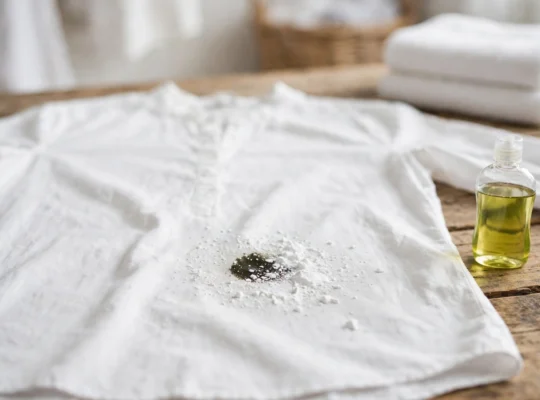
Wash inside out on a gentle or cool cycle, in cold or warm water not exceeding 30C, with a mild, neutral detergent. Turn the garment inside out and use a mesh bag for delicate items, because that reduces surface abrasion, which is what causes fibrillation. Avoid harsh detergents and chlorine bleach, which can roughen the fibre and fade colours. Do not use fabric softener: it coats the fibre and works against the natural moisture handling. Dry flat or tumble on low heat; high heat can harden the hand and increase shrinkage. Dry naturally in a cool, well-ventilated place and avoid prolonged direct sunlight, which can make the fibres brittle and fade the colour. Iron only if needed, at a low temperature, and avoid direct high heat.
Shrinkage deserves a note. Without preshrinking, the first wash may cause shrinkage of around 8 percent, depending on the fabric structure, weight and finishing. Most TENCEL fabrics are preshrunk, and with proper treatment the first wash shrinkage of pure lyocell is held low, typically 3 to 6 percent over five washes in knit form. Wash cool, use a gentle spin, and avoid aggressive tumble drying, and the fabric stays stable. If a TENCEL garment feels rougher or looks fuzzy after washing, that is usually fibrillation from harsh washing, not a fault in the fibre: wash it gentler next time, inside out, and the surface will stay smooth. For more on keeping fabrics in good condition, see our fabric care guide.
What should you look for when buying TENCEL lyocell?
Buying well matters with TENCEL, because the label tells you what the marketing does not. Check these five things before you buy.
First, the fibre percentage. Look for at least 70 percent TENCEL lyocell for noticeable performance benefits, and ideally 90 percent or more for the full softness and sustainability advantage. A TENCEL cotton blend of 60 to 70 percent TENCEL with 30 to 40 percent cotton is a good balance of cost, durability and softness. Be cautious of vague terms such as "made with Tencel" or "Tencel-rich" without a percentage: those products may contain as little as 10 to 30 percent lyocell, and the rest of the cloth decides how it behaves.
Second, the certification. Look for OEKO-TEX Standard 100, which tests the finished article for harmful substances, FSC or PEFC for responsible wood sourcing, or the EU Ecolabel. Lenzing's own TENCEL trademark on the packaging or product description is itself a check, because only Lenzing fibre can carry it. These marks validate claims about safety and sustainability that a brand's own words cannot.
Third, the weight and the weave. Check the GSM: lightweight fabrics at 80 to 120 GSM work best for clothing, midweight at 120 to 180 GSM suits shirts and light jackets, and heavier weights over 180 GSM are appropriate for denim, outerwear or upholstery. For sheets, 140 to 180 GSM is the useful range. Choose the weave for the use: sateen gives a smooth, lustrous finish ideal for bed sheets, twill gives a durable diagonal weave common in trousers and jackets, and plain weave suits light shirting.
Fourth, the thread count, for bedding only. Unlike cotton, a high thread count is not always better with TENCEL. The fibres are finer, so a range of 300 to 400 is sufficient for softness and durability. Counts above 500 may indicate misleading marketing or added synthetic fibres, so treat a very high count as a warning sign rather than a selling point.
Fifth, the price and the seller. Branded TENCEL commands a 15 to 30 percent premium over generic lyocell, so a price far below the market average is a red flag, as are unlabelled blends and no transparency about sourcing. A seller that names the fibre percentage, the weave, the GSM and the certification is easier to trust than one that says only "eco-friendly". And remember the trade-off: TENCEL is slightly more expensive than cotton, and worth it for items you will wash and wear for years, because the cost per wear falls as the fabric outlasts cheaper alternatives.
Frequently Asked Questions
Is TENCEL the same as lyocell? No, not quite. Lyocell is the generic fibre name for a regenerated cellulose fibre made by dissolving wood pulp in NMMO and spinning it. TENCEL is Lenzing's brand name for its own lyocell and modal fibres, made under audited sustainability standards. All TENCEL lyocell is lyocell, but not all lyocell is TENCEL.
Does TENCEL shrink? A little. Typical knit shrinkage is 3 to 6 percent over five washes, and an unpreshrunk fabric may shrink around 8 percent on the first wash. Most TENCEL fabrics are preshrunk, and washing cool on a gentle cycle with low-heat drying keeps shrinkage small. It shrinks less than cotton in most cases.
Is TENCEL fabric good for hot sleepers? Yes. TENCEL absorbs about 50 percent more moisture than cotton and releases it quickly, and its air permeability is high, so sheets feel cool and dry rather than clammy. That is why it is widely used for bedding, and why a thread count of 300 to 400 is enough: the fibre is finer than cotton, so a very high count adds nothing.
Can you machine wash TENCEL? Yes, on a gentle or cool cycle in water not exceeding 30C, with a mild, neutral detergent. Wash inside out, avoid chlorine bleach and harsh detergents, and dry flat or tumble on low heat. High heat hardens the hand and increases shrinkage, and heavy abrasion can cause fibrillation, the fine fuzzing of the fibre surface.
Is TENCEL sustainable? It is one of the most sustainable fibres at commercial scale. The wood comes from FSC or PEFC-certified forests, the closed-loop process recovers over 99 percent of its solvent, water use is reported at 10 to 20 times lower than conventional cotton, and the carbon footprint is reported at about 60 percent lower than generic viscose. The fibre is also biodegradable. Generic lyocell varies by producer, so the TENCEL brand is the reliable guarantee.
Related Reading: Sustainable Fabric Shopping Guide UK | Types of Fabric Guide 2026 | Fabric Care and Clothing Storage Guide | Hemp Fabric Guide
Written by the Textile Conservancy team. We write practical, UK focused fabric guides based on published standards and labelling rules, and we check our facts against the sources named in each guide.